








What's Happening?
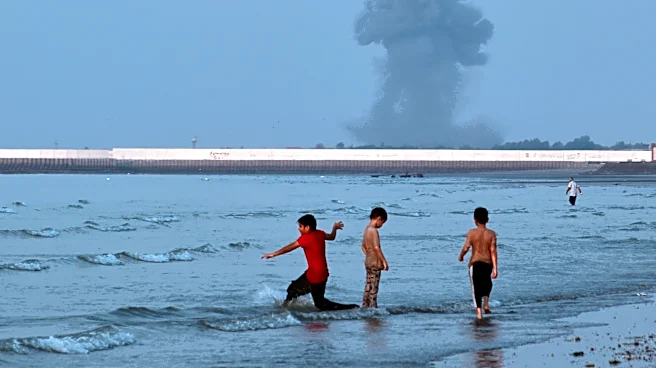
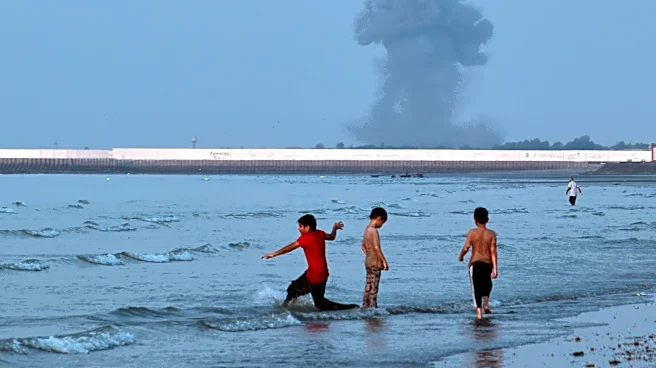
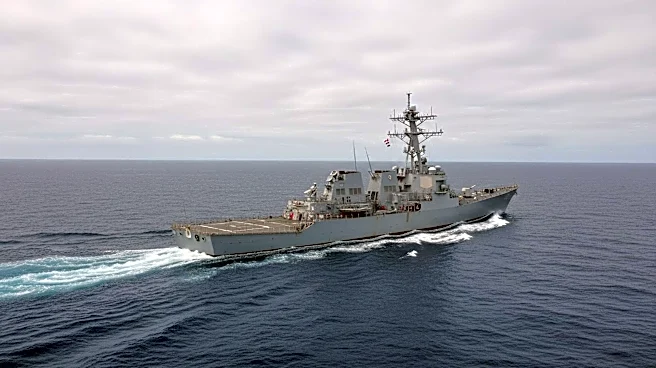
The U.S. military has intensified its operations against Iran following the collapse of a ceasefire, with over 300 strikes on Iranian military sites. This escalation comes after Iran's attacks on commercial vessels in the Strait of Hormuz. Lt. Col. Karen
Kwiatkowski, a retired U.S. Air Force officer, has highlighted the logistical challenges the U.S. military faces in sustaining such operations. The situation has led to concerns about the sustainability of military engagements, potentially resulting in cycles of escalation and de-escalation. The prediction markets have noted a slight decrease in the likelihood of a formal U.S. war declaration on Iran, with current probabilities at 5.5% by the end of 2026.
Why It's Important?
The escalation in military operations against Iran underscores the ongoing tensions in the Middle East and the strategic importance of the Strait of Hormuz, a critical chokepoint for global oil shipments. The U.S. military's logistical challenges highlight the strain on resources and the potential impact on future military readiness. This situation could influence U.S. foreign policy and defense strategies, particularly in relation to Iran and other potential adversaries. The economic implications are significant, as further instability in the region could affect global oil prices and market dynamics.
What's Next?
Observers are closely monitoring potential actions by the U.S. Congress regarding a formal war declaration. Any changes in diplomatic engagements between the U.S. and Iran could alter the current trajectory of hostilities. Additionally, further military actions or retaliations by Iran could shift public and political sentiment, potentially affecting the U.S.'s involvement in additional conflicts.