
What's Happening?
The Korea Society has recognized Peace Corps Korea Volunteers, acknowledging their significant role in fostering connections between the United States and Korea. A recent article in The Korea Times detailed the 60th anniversary of the first group of volunteers,
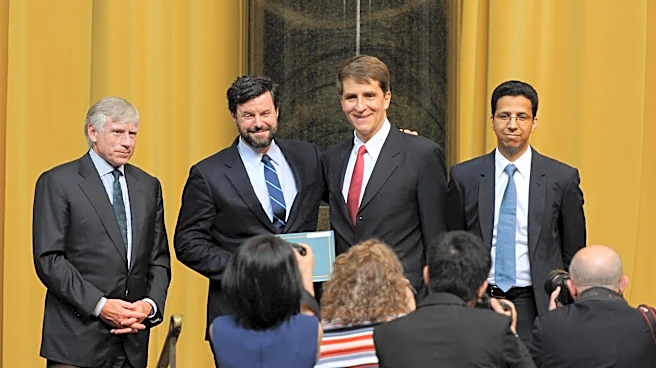
known as K-1, who arrived in 1966. The Korea Society's 2008 Annual Dinner played a pivotal role in initiating the 'Revisit' program, which invites former volunteers back to Korea. Then-President Lee Myung-bak, surprised by the volunteers' contributions, proposed the program. Over 2,000 young Americans served in Korea between 1966 and 1981, teaching English and providing health education, thereby building lasting relationships.
Why It's Important?
This recognition underscores the historical depth and enduring strength of people-to-people connections between the U.S. and Korea, forged through cultural exchange and humanitarian service. The Peace Corps' legacy in Korea highlights a successful model of public diplomacy that transcends governmental relations, creating a foundation of mutual understanding and goodwill. For U.S. foreign policy, these long-standing relationships contribute to a stable and cooperative alliance in a critical geopolitical region. The continued engagement through programs like 'Revisit' reinforces the value of soft power and cultural diplomacy in maintaining international partnerships and fostering positive perceptions of the United States abroad.
What's Next?
The Korea Society and organizations like Friends of Korea will likely continue to facilitate connections between former Peace Corps volunteers and Korea, potentially expanding 'Revisit' programs and cultural exchange initiatives. These efforts will further strengthen the bilateral relationship by leveraging personal histories and shared experiences. The ongoing recognition of these volunteers serves as a reminder of the importance of cultural diplomacy and may inspire future generations of Americans to engage in similar international service. Such initiatives also contribute to the broader narrative of U.S.-Korea relations, emphasizing shared values and historical bonds beyond political and economic ties.
Beyond the Headlines
The story of Peace Corps Korea volunteers illustrates the profound, long-term impact of individual citizens on international relations. It highlights how grassroots efforts and personal connections can build bridges between nations that endure for decades, even through geopolitical shifts. The involvement of figures like Kathleen Stephens, a former Peace Corps volunteer who later became U.S. ambassador to Korea, exemplifies the career trajectories and deep expertise that can emerge from such experiences, influencing diplomatic relations at the highest levels. This narrative also subtly critiques purely transactional approaches to foreign policy, emphasizing the irreplaceable value of cultural immersion and humanitarian aid in fostering genuine international partnerships.