






What's Happening?
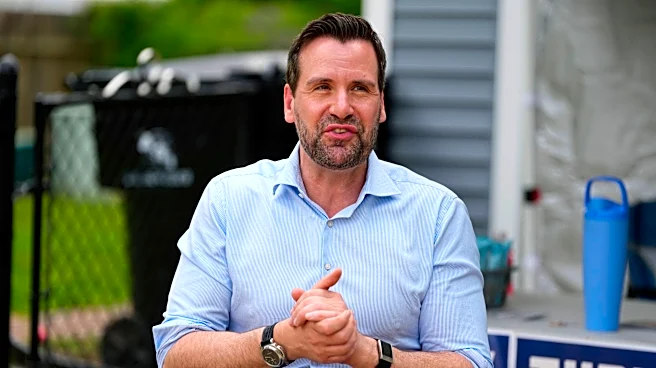
In a surprising turn of events, businessman Zach Lahn defeated President Trump's endorsed candidate, Rep. Randy Feenstra, in the Republican primary for Iowa governor. Lahn's victory is seen as a significant setback for President Trump, who has enjoyed
a series of primary victories. Lahn, who was relatively unknown before his campaign, gained traction by aligning with the Make America Healthy Again (MAHA) movement, which opposes the use of pesticides and supports regenerative farming. His campaign focused on breaking up agricultural monopolies and advocating for healthier farming practices. The MAHA movement, which supports Health Secretary Robert F. Kennedy Jr., has been critical of the Trump administration's agricultural policies, particularly its support for glyphosate, a controversial herbicide.
Why It's Important?
Lahn's victory signals a potential shift in the political landscape, highlighting growing discontent with traditional agricultural practices and the influence of large corporations. This development could impact future agricultural policies and the political strategies of both parties. For President Trump, the loss represents a challenge to his influence within the Republican Party, particularly in a state that has been a stronghold for his support. The outcome may encourage Democrats, who see an opportunity to gain control of the governor's office, as they rally behind their candidate, State Auditor Rob Sand. The election results also underscore the importance of health and environmental issues in political campaigns, as voters increasingly prioritize these concerns.
What's Next?
As the general election approaches, Lahn will likely continue to emphasize his MAHA-aligned policies, while Democrats will aim to capitalize on the perceived vulnerability of Trump's influence. The outcome of this race could influence other states' political strategies, particularly in regions where agricultural issues are prominent. Both parties will need to address the growing demand for sustainable farming practices and the reduction of chemical use in agriculture. The Democratic candidate, Rob Sand, will focus on his moderate message and rural background to appeal to voters. The results of this election could have broader implications for national agricultural policy and the future direction of the Republican Party.