









What's Happening?
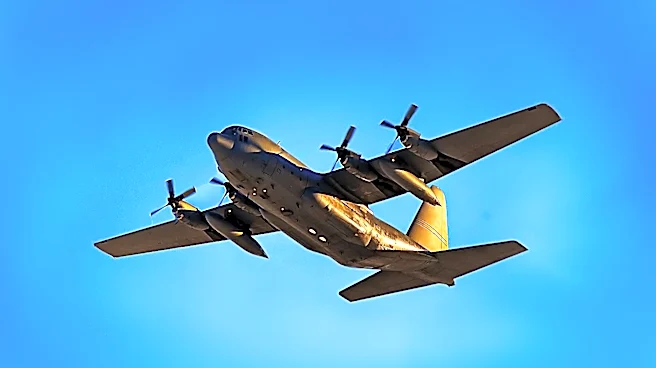
The Royal Australian Air Force (RAAF) has successfully launched a domestically developed cargo-delivery unmanned aerial vehicle (UAV) from an airborne Lockheed Martin C-130J Hercules aircraft. This event marks the first time such a launch has been conducted,
according to the Australian Department of Defence (DoD). The launch took place in mid-July during Exercise 'Jericho Dawn' in Cultana, South Australia, and involved the Air Launched Delivery Drone (Aladdin), which was developed by the RAAF's Jericho Disruptive Innovations programme. The DoD highlighted that this launch represents a significant milestone in air force innovation, moving a prototype capability from the laboratory into a military operating environment. The Aladdin UAV is capable of carrying up to 35 kg of supplies, communications equipment, or critical parts. The exercise aimed to test the UAV at tactical altitudes and speeds representative of the C-130J, as stated by Wing Commander Keirin Joyce.
Why It's Important?
This development is significant as it showcases the RAAF's ability to integrate and operationalize innovative technologies to adapt to rapidly changing strategic environments. The successful launch of the Aladdin UAV from a C-130J Hercules demonstrates the potential for enhanced logistical capabilities in military operations, allowing for the rapid delivery of essential supplies and equipment in various scenarios. This capability could improve the efficiency and effectiveness of military operations, particularly in remote or challenging environments where traditional delivery methods may be impractical. The advancement also reflects broader trends in military innovation, where unmanned systems are increasingly being utilized to enhance operational capabilities and reduce risks to personnel.
What's Next?
Following this successful demonstration, the RAAF may continue to refine and expand the capabilities of the Aladdin UAV and similar technologies. Future exercises could involve more complex scenarios and integration with other military systems to further test and validate the UAV's operational effectiveness. Additionally, the RAAF might explore collaborations with other branches of the military or international partners to share insights and develop joint capabilities. The continued development and deployment of such technologies could lead to broader adoption within the military, potentially influencing procurement strategies and operational doctrines.
Beyond the Headlines
The successful launch of the Aladdin UAV from a C-130J Hercules could have implications beyond immediate military applications. It highlights the growing importance of unmanned systems in modern warfare and the potential for these technologies to transform logistics and supply chain management in both military and civilian contexts. The ability to deliver supplies quickly and efficiently using UAVs could be applied to disaster relief efforts, humanitarian missions, and other non-military operations, providing a versatile tool for addressing various challenges. This development also raises questions about the ethical and regulatory frameworks governing the use of unmanned systems, as their capabilities and applications continue to expand.