
What's Happening?
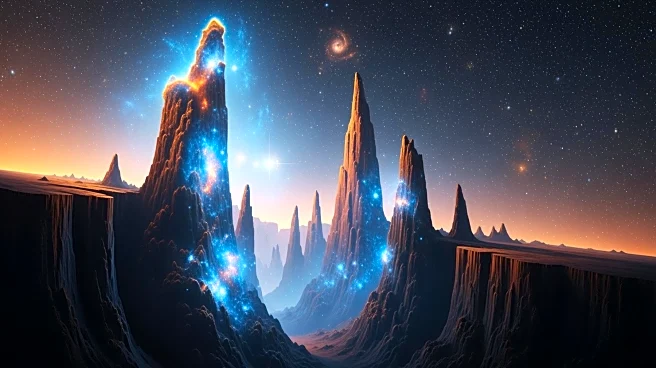
The James Webb Space Telescope has captured a stunning image of the 'Cosmic Cliffs,' a region at the edge of a massive gaseous cavity within the star cluster NGC 3324. This cluster, located approximately
9,100 light-years away near the Carina Nebula, is considered relatively young at about 12 million years old. The image is part of the 2025 Space Telescope Advent Calendar, which reveals a new astronomical image each day leading up to December 25. The Cosmic Cliffs image showcases the telescope's ability to peer into the depths of space, providing insights into the formation and evolution of stars within this cluster.
Why It's Important?
The release of the Cosmic Cliffs image underscores the James Webb Space Telescope's role in advancing our understanding of the universe. By capturing detailed images of distant star clusters, the telescope helps scientists study the processes of star formation and the dynamics of interstellar matter. This contributes to a broader understanding of cosmic evolution and the conditions that lead to the birth of stars and planetary systems. The data gathered by the telescope can also inform future research and exploration missions, potentially leading to new discoveries about the origins of our own solar system and the potential for life elsewhere in the universe.
What's Next?
As the Space Telescope Advent Calendar continues, more images will be unveiled, each offering a glimpse into different regions of space. These images are expected to provide further insights into the structure and composition of various celestial bodies. The ongoing release of these images will likely stimulate interest and discussion within the scientific community and among the public, highlighting the importance of space exploration and the potential for future discoveries. Researchers will continue to analyze the data collected by the James Webb Space Telescope, using it to refine models of star and galaxy formation.
Beyond the Headlines
The Cosmic Cliffs image not only captivates with its visual beauty but also raises questions about the nature of star formation and the lifecycle of stars. The ability to observe such distant phenomena in detail allows scientists to test theories about the early stages of star development and the influence of environmental factors on star clusters. This research could have implications for understanding the conditions necessary for the development of life-supporting planets, offering a deeper appreciation of our place in the cosmos.