





What's Happening?
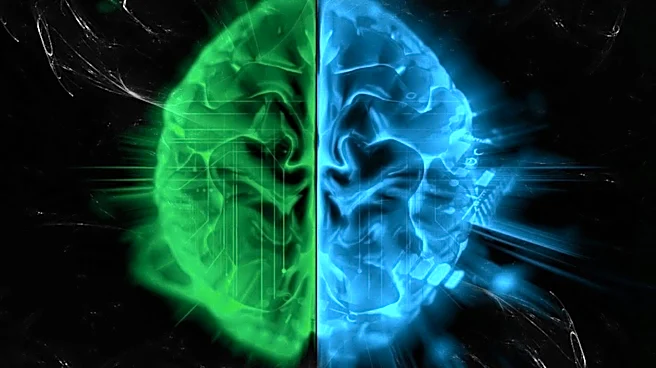
Northwestern Medicine has addressed the popular misconception that individuals are either 'left-brained' (logical) or 'right-brained' (creative). According to their updated information, this idea is largely a myth. Research, including studies using magnetic
resonance imaging (MRI), indicates that most daily tasks and cognitive functions require both hemispheres of the brain to work together. While certain functions may be more closely linked to one side (e.g., language to the left hemisphere, spatial thinking to the right), the brain operates as an interconnected system, with constant communication between its different regions. A 2013 study from the University of Utah, which reviewed over 1,000 brain scans, found no evidence that people favor one side of the brain overall.
Why It's Important?
Debunking the 'left brain vs. right brain' myth is important for several reasons. Firstly, it promotes a more accurate understanding of human brain function, moving away from oversimplified categorizations that can limit perceptions of individual capabilities. Secondly, it emphasizes the holistic nature of cognitive processes, highlighting that activities like language, creativity, and problem-solving engage multiple brain regions simultaneously. This understanding can inform educational strategies, encouraging approaches that stimulate various aspects of brain function rather than focusing on perceived 'sidedness.' For individuals, it can alleviate pressure to conform to a 'type' and encourage engagement in diverse activities that support overall brain health and cognitive resilience.
What's Next?
Moving forward, the focus in neuroscience and public health communication will likely continue to emphasize the interconnectedness of brain functions. Educational programs and wellness initiatives may increasingly promote activities that engage the 'whole brain,' such as learning new skills or languages, practicing mindfulness, engaging in creative hobbies, and solving puzzles. These activities are believed to keep the brain active and support cognitive health as individuals age. The medical community will continue to use advanced imaging techniques to further understand the complex interplay between different brain regions, refining our knowledge of how the brain coordinates various roles in everyday tasks.
Beyond the Headlines
The persistence of the 'left brain vs. right brain' myth highlights how easily simplified scientific concepts can become ingrained in popular culture, even when contradicted by evidence. This phenomenon has broader implications for how scientific information is disseminated and understood by the public. It underscores the need for clear, evidence-based communication from institutions like Northwestern Medicine to correct misinformation and foster a more nuanced understanding of complex biological processes. Furthermore, recognizing the brain's integrated function can encourage a more holistic approach to personal development and education, valuing diverse skills and cognitive strengths rather than pigeonholing individuals based on a false dichotomy.