




What's Happening?
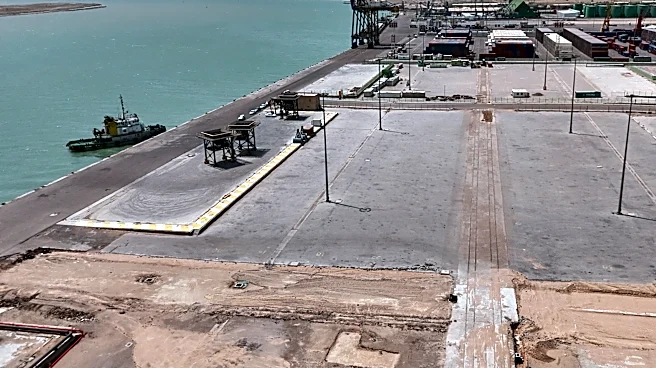
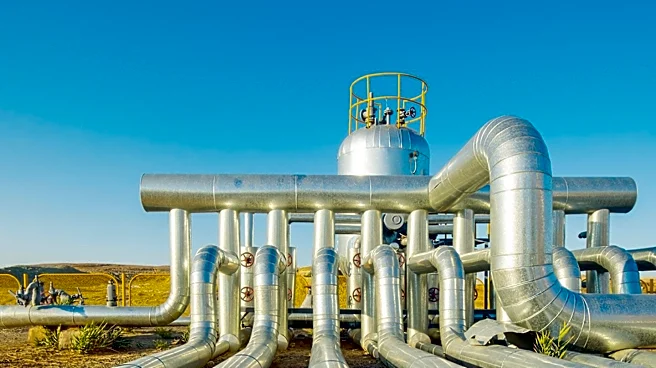
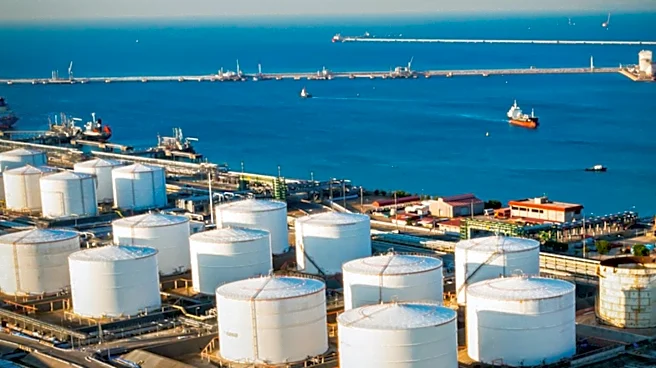
Iraq and Türkiye have entered into a one-year agreement to transport and load Iraqi crude oil through the Iraq-Türkiye pipeline to the Turkish port of Ceyhan. This agreement aims to ensure the continued flow of Iraqi oil exports at a minimum rate of 750,000
barrels per day. The deal is part of a broader strategy to enhance energy cooperation between the two nations and to eventually increase export capacity beyond one million barrels per day. This expansion is contingent upon the completion of a major pipeline project connecting Basra, Haditha, Kirkuk, and Ceyhan. The agreement is crucial for Iraq, as oil exports are a major source of government revenue and foreign exchange.
Why It's Important?
This agreement is significant for Iraq's economy, which heavily relies on oil exports. By securing a reliable export route through Türkiye, Iraq can stabilize its oil revenue and strengthen its position in the global energy market. For Türkiye, the agreement reinforces its role as a key energy transit country, connecting Middle Eastern oil producers with international markets. The potential increase in export capacity could enhance the strategic importance of the Iraq-Türkiye pipeline, providing both countries with economic and geopolitical benefits. Additionally, the agreement may lead to further cooperation in other sectors, such as electricity and water resources, fostering deeper economic ties between Iraq and Türkiye.
What's Next?
The agreement sets the stage for a comprehensive framework that could expand Iraq's export capacity through Türkiye. The completion of the planned pipeline infrastructure is crucial for achieving the target of over one million barrels per day. Iraqi and Turkish companies are expected to collaborate on implementing the terms of the agreement, while both governments work towards a broader framework covering strategic sectors. This development could enhance Iraq's access to international energy markets and support Türkiye's ambition to become a regional energy hub.