



What's Happening?
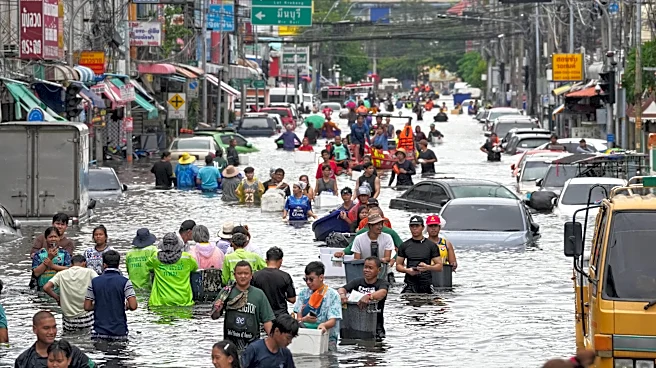
Heavy overnight rain has caused widespread flooding on roads across Bangkok and the neighboring province of Nakhon Pathom, significantly disrupting morning traffic. Several districts in Bangkok, including Bang Kapi, Ramkhamhaeng, Lat Krabang, and Min
Buri, reported standing water, with depths ranging from 5-10 centimeters in some areas. Motorists were advised to proceed with caution or avoid affected routes. In Nakhon Pathom, widespread waterlogging was reported in multiple locations, including Phet Kasem Road and areas around Wat Yai intersection. The Bangkok Metropolitan Administration’s Department of Drainage and Sewerage identified standing water on five main road sections. The Thai Meteorological Department (TMD) has forecast thunderstorms across 70% of Bangkok and surrounding provinces, with isolated heavy rain and gusty winds, and warned of increased rainfall from October 9-13, raising the risk of further flooding.
Why It's Important?
The recurrent flooding in Bangkok and surrounding areas, exacerbated by heavy rainfall, poses significant challenges to urban infrastructure, daily life, and the local economy. Disruptions to morning traffic lead to lost productivity, increased commuting times, and potential economic losses for businesses. The persistent threat of flooding necessitates continuous investment in drainage systems and urban planning to mitigate its impact. For residents, it means potential damage to property, health risks from contaminated water, and increased stress. The forecast for more heavy rain indicates that these issues are likely to persist, requiring proactive measures from both authorities and citizens. The situation highlights the vulnerability of large urban centers to extreme weather events, a concern that is growing globally due to climate change.
What's Next?
Municipal authorities are actively monitoring water levels and conducting drainage operations to alleviate current flooding. Residents in low-lying areas and near floodgates have been advised to move belongings to higher ground and relocate vehicles to safer areas in advance of further rainfall. The Thai Meteorological Department's forecast of increased rainfall from October 9-13 means that Bangkok and surrounding provinces should prepare for potential worsening conditions. This will likely involve continued traffic advisories, public warnings, and ongoing efforts by drainage and emergency services. Long-term strategies will need to focus on improving urban drainage infrastructure, implementing effective flood prevention measures, and developing robust early warning systems to minimize the impact of future heavy rain events.
Beyond the Headlines
The recurring flooding in Bangkok underscores the broader challenges faced by rapidly urbanizing cities in Southeast Asia in adapting to climate change and extreme weather patterns. The city's low elevation, extensive canal system, and dense development make it particularly susceptible to inundation. Beyond immediate disruptions, persistent flooding can lead to long-term environmental and public health issues, including waterborne diseases and damage to ecosystems. The economic implications extend beyond traffic delays, affecting tourism, agriculture, and local businesses. This situation highlights the urgent need for integrated urban planning that incorporates climate resilience, sustainable water management, and green infrastructure solutions. It also calls for greater public awareness and community preparedness to build a more resilient urban environment in the face of increasing climate variability.