



What's Happening?
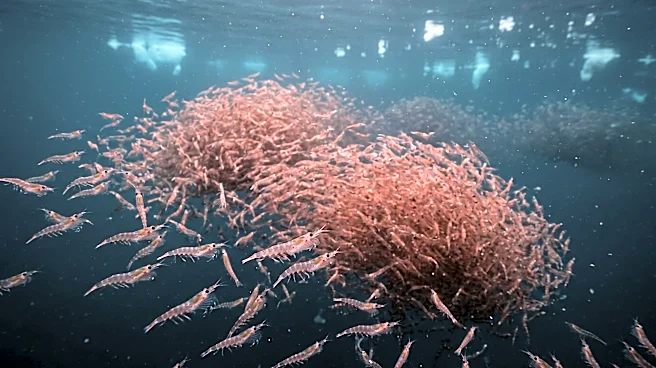
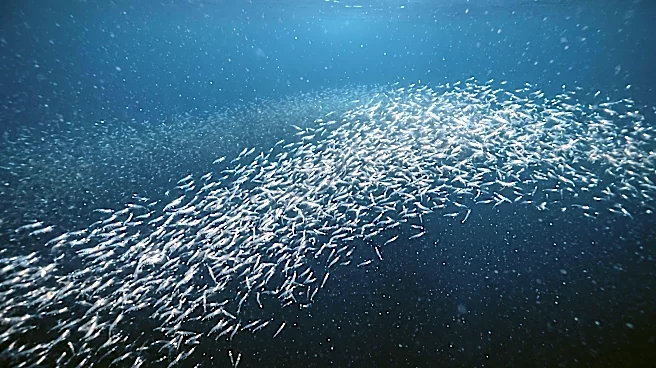
A new study has investigated the spatial distribution of krill-mediated carbon sequestration in the Southern Ocean and its overlap with marine protected areas (MPAs) and krill fishing activities. Antarctic krill are crucial to the ocean's carbon cycle,
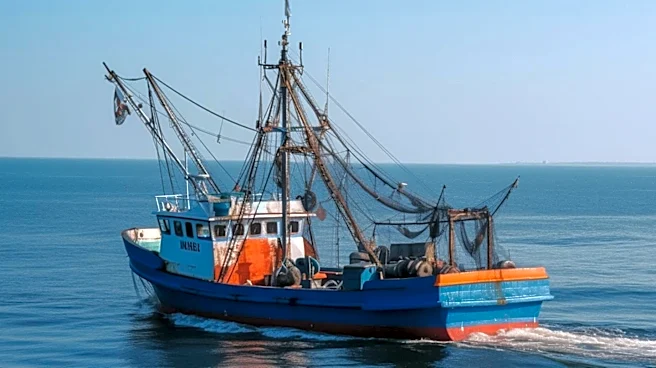
particularly in sequestering carbon, and also support a significant commercial fishery that harvests approximately 400,000 tons annually. Researchers defined 'Key Areas for Krill-mediated carbon Sequestration' (KAKS) as zones combining high krill density and long carbon sequestration times, identifying them as regions where krill contribute most significantly to carbon sequestration. These KAKS cover about 7.1 million square kilometers, representing 16.8% of the Southern Ocean. The study found that established MPAs currently cover only a marginal 4.8% of these critical KAKS. However, if all proposed MPAs are implemented, their coverage of KAKS could increase to 29.2%.
Why It's Important?
This research is vital for informing spatial planning and fishery management in the Southern Ocean, aiming to achieve the dual objectives of biodiversity conservation and the protection of carbon sinks. Krill's role in carbon sequestration is a critical, yet under-investigated, aspect of the global climate system. By identifying KAKS, the study provides a scientific basis for prioritizing conservation efforts in areas that offer the greatest benefit for carbon cycling. The current low coverage of KAKS by established MPAs indicates a gap in existing conservation strategies. The potential for proposed MPAs to significantly increase this coverage highlights the importance of their implementation. Furthermore, the finding that almost all krill catches occur outside KAKS, in areas with high krill density but lower sequestration times, suggests that current fishing practices may not directly conflict with the most critical carbon sequestration zones, though further analysis is needed.
What's Next?
The findings are intended to guide future research and inform policy decisions regarding fishery management and the establishment of marine protected areas in the Southern Ocean. The study's detailed mapping of KAKS provides a clear framework for conservation bodies, such as the Commission for the Conservation of Antarctic Marine Living Resources (CCAMLR), to consider when designating new protected zones. The emphasis on proposed MPAs suggests that their successful implementation could substantially enhance the protection of krill's carbon sequestration function. Future steps will likely involve integrating these findings into ongoing discussions about MPA proposals and potentially re-evaluating existing fishery regulations to ensure they align with both biodiversity conservation and climate mitigation goals. Further research may also explore the long-term impacts of krill harvesting on the overall health and carbon cycling capacity of the Southern Ocean.
Beyond the Headlines
This study delves into the less obvious, yet profound, ecological service provided by Antarctic krill beyond their role as a food source: their contribution to the global carbon cycle. By sequestering carbon, krill play a part in mitigating climate change, adding another layer of complexity to their management. The research highlights the interconnectedness of marine ecosystems, climate regulation, and human economic activities. It also underscores the challenge of designing effective conservation strategies that account for multiple ecological functions. The distinction between areas important for krill density (relevant for fisheries) and areas important for krill-mediated carbon sequestration (relevant for climate) suggests that a nuanced approach to marine spatial planning is necessary. This could lead to the development of more sophisticated management tools that consider both ecological and climatic benefits when regulating resource extraction.