

What's Happening?
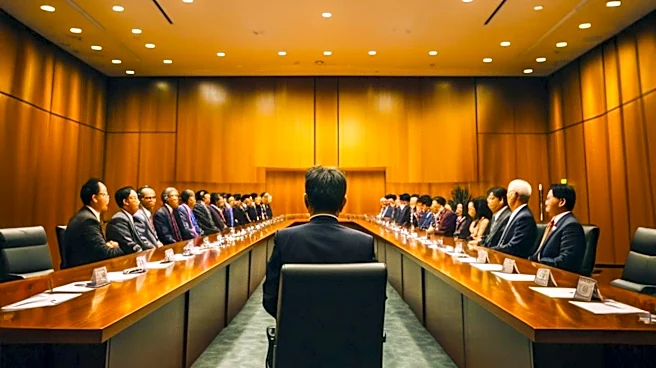
The Carnegie Endowment for International Peace, in collaboration with the Bruno Kreisky Forum for International Dialogue and the Gulf Research Centre (GRC), recently hosted the second workshop in a series on collective diplomacy in the Middle East. Held
in Vienna on November 6 and 7, 2026, the workshop, titled 'From Regional Diplomacy to Sustainable Security in the Middle East: Perspectives from the Gulf,' brought together diplomats, officials, and experts from the Gulf region, the wider Middle East, and Europe. Representatives from regional and international organizations also participated. Building on a previous workshop in May 2026 that focused on the role of middle powers in mediation, this session explored how regional diplomatic initiatives could evolve into more sustained forms of security cooperation. A key area of discussion was the role of external actors, including the United States, Europe, and China, and how Gulf states can enhance their capacities for collective security, crisis management, and mediation. Discussions highlighted growing security challenges and examined various approaches to regional security, identifying shared priorities and differing threat perceptions.
Why It's Important?
This workshop is important because it addresses critical security challenges in the Middle East, a region with significant geopolitical implications for the United States and global stability. By fostering dialogue among regional and international stakeholders, the initiative aims to develop sustainable security cooperation mechanisms. The focus on Gulf perspectives is crucial, as these states are increasingly asserting their roles in regional diplomacy and security. Understanding and supporting these efforts can contribute to de-escalation and stability, potentially reducing the need for direct U.S. intervention in future conflicts. The discussions on the roles of external actors like the U.S. and China underscore the complex web of international relations influencing the region. Strengthening regional ownership and capacity for crisis management can lead to more resilient security frameworks, benefiting U.S. strategic interests by promoting a more self-reliant and stable Middle East.
What's Next?
The Bruno Kreisky Forum and its partners plan to continue these discussions, with the goal of developing practical proposals for regional security cooperation. This ongoing dialogue will include the Vienna Mediation Conference on Peace, Security, and Reconstruction scheduled for June 2027. These future engagements aim to translate the insights gained from the workshops into actionable strategies. The continued focus on regional ownership and the potential for closer GCC–EU cooperation suggests a future where regional actors take a more prominent role in their own security, potentially shifting dynamics for external powers. The outcomes of these discussions could influence diplomatic strategies and security policies in the Middle East for years to come, with implications for how the U.S. engages with the region.
Beyond the Headlines
The initiative's exploration of lessons from the Helsinki Process and the experience of the OSCE for the Middle East suggests a deeper aspiration to build confidence-building measures and maintain communication channels even during periods of tension. This reflects a long-term vision for regional stability that goes beyond immediate crisis management. The emphasis on regional ownership and strengthening local capacities for mediation and crisis management could lead to a fundamental shift in the security architecture of the Middle East, moving away from reliance on external security guarantees towards more indigenous solutions. This could have profound implications for the U.S., potentially altering its military footprint and diplomatic engagement strategies in the region over time. The discussions also implicitly acknowledge the evolving geopolitical landscape, where traditional alliances are being re-evaluated in light of new global powers and regional dynamics.