




What's Happening?
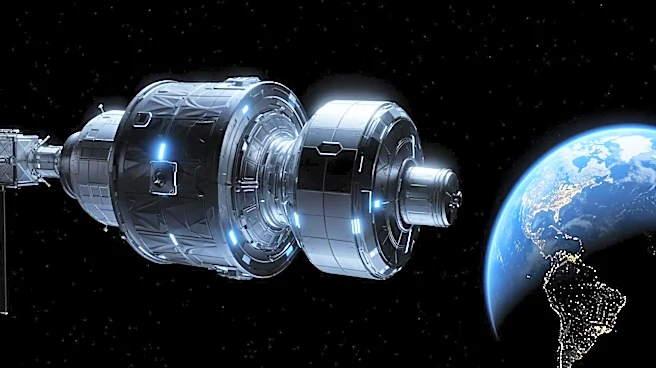
In 2017, NASA made the decision to deliberately crash the Cassini spacecraft into Saturn's atmosphere. This decision was driven by concerns over the potential contamination of Saturn's moon Enceladus, which has a subsurface ocean that could harbor life.
Cassini, which had been orbiting Saturn for 13 years, was running low on fuel, and NASA wanted to prevent any chance of it colliding with Enceladus or Titan. The spacecraft's final mission, known as the Grand Finale, involved a series of daring orbits between Saturn and its rings, gathering valuable scientific data before its controlled descent into the planet.
Why It's Important?
The destruction of Cassini was a significant event in planetary protection, highlighting NASA's commitment to preventing contamination of potentially habitable environments. Enceladus, with its subsurface ocean and detected hydrogen gas, is considered one of the most promising places in the solar system to search for life. By ensuring Cassini did not crash into Enceladus, NASA preserved the moon's pristine conditions for future exploration. This decision underscores the importance of protecting celestial bodies that could provide insights into astrobiology and the potential for life beyond Earth.
What's Next?
Future missions to Enceladus are likely to build on Cassini's discoveries, focusing on the moon's plumes and subsurface ocean. These missions will aim to determine the presence of life and further understand the moon's geophysical processes. The data collected by Cassini during its final orbits will continue to inform and guide these future explorations, ensuring that any biological findings are truly native to Enceladus and not the result of contamination from Earth.