
What's Happening?
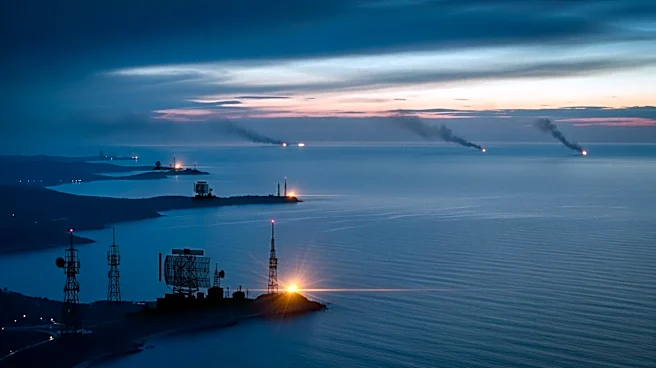
US Central Command (CENTCOM) announced that US forces have conducted strikes on Iranian military facilities responsible for recent attacks on US naval assets in the Strait of Hormuz. This action follows
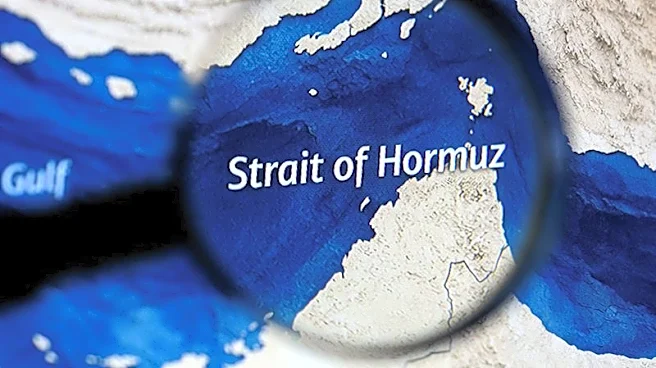
Iran's targeting of US naval vessels, including the USS Truxtun and USS Rafael Peralta, with missiles and drones. CENTCOM emphasized that the United States does not seek escalation, despite the strikes. The conflict centers around Iran's nuclear program and its assertion of sovereignty over the Strait of Hormuz, a critical maritime route. The US demands include dismantling key Iranian nuclear facilities and reopening the strait, while Iran insists on its right to enrichment and complete sanctions relief.
Why It's Important?
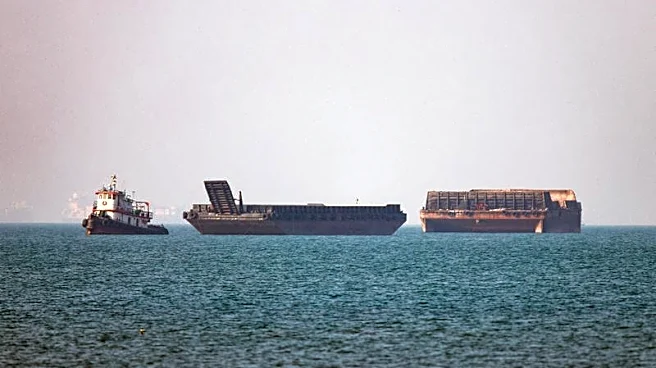
The ongoing conflict between the US and Iran has significant implications for global maritime norms and regional stability. The Strait of Hormuz is a vital passage for global oil and gas shipments, and Iran's attempts to assert control over it could disrupt international trade. The US's military response highlights the strategic importance of the strait and the potential for escalation if diplomatic solutions are not reached. The situation also affects global energy markets, as any prolonged disruption could lead to increased oil prices and economic instability.
What's Next?
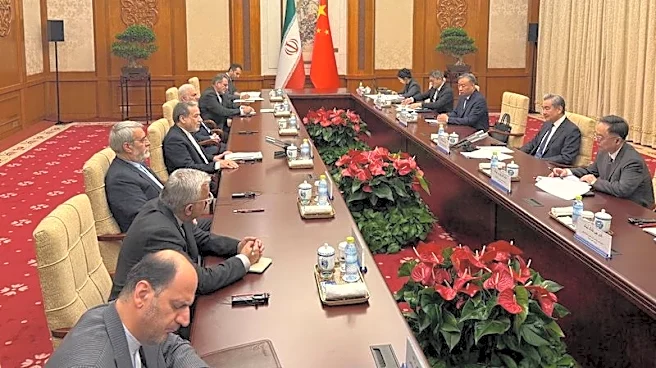
Negotiations between the US and Iran are expected to continue, with both sides holding firm on their demands. The US seeks to prevent Iran from developing nuclear weapons, while Iran aims to secure recognition of its sovereignty over the Strait of Hormuz. The outcome of these talks will likely influence future US-Iran relations and the stability of the Middle East. Additionally, the international community, including major stakeholders like China and Russia, may play a role in mediating the conflict to prevent further escalation.