



What's Happening?
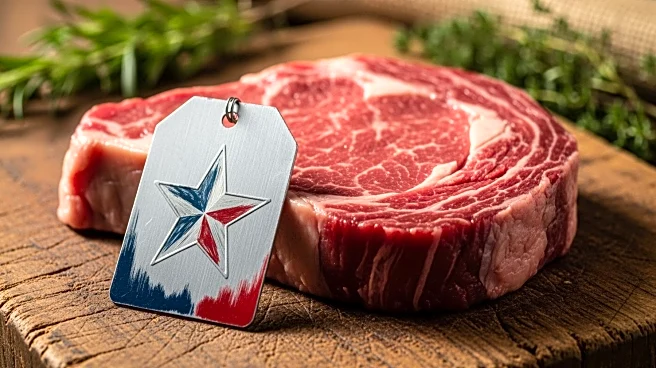
On National Agriculture Day 2026, U.S. Secretary of Agriculture Brooke L. Rollins announced a new national campaign promoting the 'Product of USA' label for meat, poultry, and egg products. This label, effective from January 1, 2026, ensures that these
products are entirely born, raised, harvested, and processed in the United States. The initiative aims to provide transparency and fairness in the food supply chain, allowing American consumers to support domestic producers. Previously, imported products could claim the 'Product of USA' label after minimal processing, but the new standard eliminates this practice. The label is voluntary but requires strict verification to ensure authenticity.
Why It's Important?
The introduction of the 'Product of USA' label is significant for several reasons. It aims to bolster consumer confidence by ensuring transparency in the origin of meat products. This move supports American ranchers and producers by allowing them to compete fairly in the market, potentially revitalizing the domestic agriculture sector. Since 2017, the U.S. has seen a decline in family farms and a reduction in the national herd, despite growing consumer demand for beef. The label is part of the USDA's broader plan to fortify the American beef industry, focusing on rebuilding domestic capacity and improving supply chain transparency. By empowering consumers to make informed purchasing decisions, the initiative could lead to increased support for U.S. agriculture.
What's Next?
The USDA's initiative may prompt further legislative actions, such as the potential enactment of mandatory country-of-origin labeling (MCOOL) by Congress. This would apply a uniform labeling standard to all domestic and imported beef sold in American grocery stores, further enhancing transparency and consumer trust. Stakeholders like R-CALF United Stockgrowers of America have expressed support for the new standard and are advocating for MCOOL to ensure comprehensive labeling practices. The success of the 'Product of USA' label could influence future policies aimed at strengthening the U.S. food supply chain and supporting domestic producers.