






What's Happening?
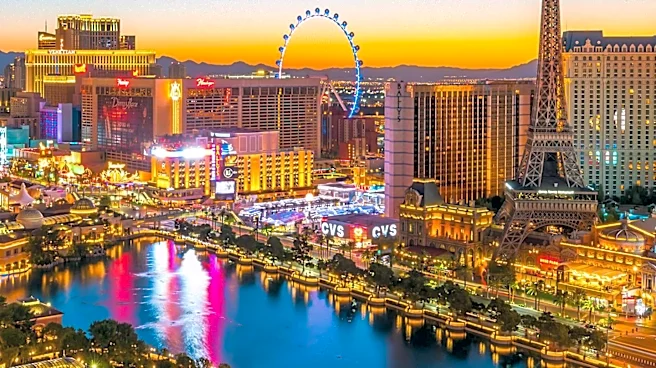
Several significant local developments are unfolding in Las Vegas. Two businesses have reached settlement agreements in a lawsuit stemming from a 2022 highway crash that killed Las Vegas police Detective Justin Terry. D.H. Charles Engineering agreed to
pay over $4.5 million to Terry's family, and Western States Contracting also reached a partial settlement. A civil trial is still scheduled for later this month. Separately, the 18b Las Vegas Arts District neighborhood association has voted to oppose the proposed Las Vegas Arts District Business Improvement District (BID) in its current form, arguing it falls short for artists, small businesses, and residents. The BID proposal aims to invest in public safety and economic development, requiring signatures from property owners representing at least 50% of the district's assessed value to advance. Additionally, the Las Vegas City Council is considering amendments to city code that would reduce parking requirements for new developments, including a general 15% cap over minimum parking spaces and decreased zone-specific minimums, aligning with the Las Vegas 2050 Master Plan's view of parking as expensive.
Why It's Important?
These developments have significant implications for Las Vegas. The settlements in the detective's crash case bring some resolution to a tragic incident, highlighting accountability in construction and engineering. The ongoing civil trial will further explore responsibility and potentially set precedents for similar cases. The opposition to the Arts District BID is crucial for the cultural and economic future of the area. If the BID proceeds without addressing community concerns, it could alter the district's character, potentially displacing artists and small businesses that define its unique identity. Conversely, a well-structured BID could provide much-needed investment. The proposed parking reductions reflect a broader urban planning shift towards more sustainable and pedestrian-friendly cityscapes. By reducing parking minimums, the city aims to decrease development costs, encourage alternative transportation, and free up valuable land for other uses, potentially impacting traffic patterns, urban density, and the economic viability of new projects.
What's Next?
The civil trial related to Detective Terry's death is scheduled to proceed later this month, which will likely bring further legal conclusions. For the Arts District BID, proponents will need to either revise the proposal to address the 18b association's concerns or gather sufficient property owner signatures to advance the current plan to the Las Vegas City Council for a public hearing. The outcome will determine the future governance and funding for improvements in the Arts District. The proposed parking code amendments will undergo further review and discussion by the Las Vegas City Council. If approved, these changes will influence future construction projects across the city, potentially leading to more compact, mixed-use developments and a greater emphasis on public transit and walkability. These decisions will shape the urban landscape and economic development of Las Vegas in the coming years.
Beyond the Headlines
The various issues in Las Vegas reflect complex urban challenges. The detective's crash settlements underscore the critical importance of safety regulations and oversight in large-scale infrastructure projects, with legal actions serving as a mechanism for accountability and victim compensation. The Arts District BID controversy highlights the tension between economic development initiatives and the preservation of local culture and community identity. It raises questions about who benefits most from such districts and how to ensure equitable development that supports existing stakeholders. The proposed parking reductions are part of a global movement in urban planning to reduce car dependency, combat climate change, and create more livable cities. However, such changes can also spark debates about convenience, accessibility for different populations, and the potential impact on local businesses that rely on vehicle access. These local decisions collectively contribute to the evolving character and sustainability of Las Vegas as a major U.S. city.