
What's Happening?
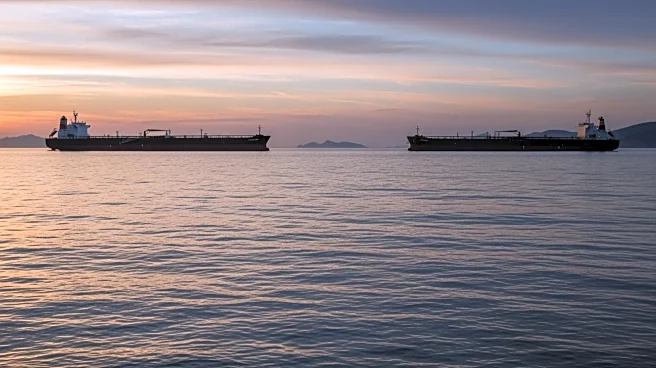
Two Russian shadow fleet tankers, Progress and Chariot Tide, are currently adrift in the Mediterranean Sea. The Progress, carrying over 700,000 barrels of Russian oil, is located north of Algeria and is reportedly
moving at a speed of one knot due to a possible mechanical failure. Meanwhile, the Chariot Tide has lost control near Gibraltar and is surrounded by Spanish and Moroccan rescue vessels. This incident follows a pattern of mechanical failures among Russian vessels, similar to the Ursa Major, which experienced an explosion and subsequent loss of propulsion. The French Navy has recently seized another shadow fleet tanker, Grinch, in the Mediterranean, highlighting ongoing issues with Russian oil transport under international sanctions.
Why It's Important?
The drifting of these tankers underscores the challenges and risks associated with the transport of Russian oil amidst international sanctions. The shadow fleet, which operates to circumvent these sanctions, poses significant environmental and geopolitical risks. The mechanical failures and subsequent adrift status of these tankers could lead to oil spills, threatening marine ecosystems and coastal economies. Additionally, the situation highlights the effectiveness of international sanctions and the political will required to enforce them. The seizure of the Grinch by French authorities demonstrates a proactive approach to enforcing sanctions, potentially setting a precedent for other nations to follow.
What's Next?
The immediate focus will likely be on securing the adrift tankers to prevent environmental disasters. International maritime authorities may increase surveillance and intervention efforts to manage the risks posed by the shadow fleet. The ongoing enforcement of sanctions could lead to more seizures of Russian vessels, further straining Russia's oil export capabilities. Additionally, diplomatic discussions may intensify as countries affected by the potential environmental impact seek assurances and actions from Russia and international bodies.
Beyond the Headlines
The situation with the shadow fleet tankers highlights broader issues of international maritime law and the enforcement of sanctions. It raises questions about the capacity of international bodies to regulate and control illicit activities on the high seas. The reliance on shadow fleets by sanctioned countries like Russia could lead to increased tensions and conflicts over maritime jurisdiction and environmental responsibility. Furthermore, the incidents may prompt a reevaluation of global oil transport security measures and the need for more robust international cooperation.