


What's Happening?
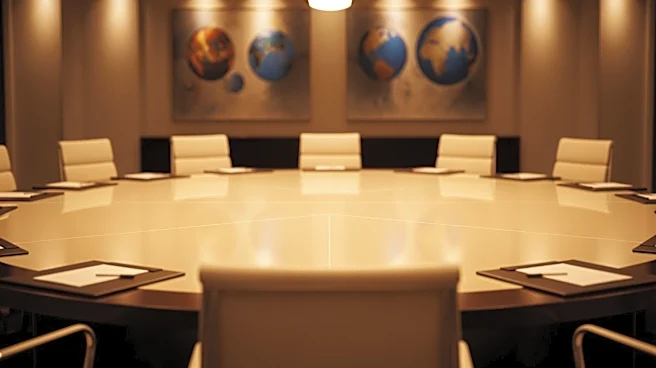
Four candidates vying to replace UN Secretary-General Antonio Guterres were recently questioned in New York about their views on global issues and leadership. The candidates include Argentina's Rafael Grossi, head of the International Atomic Energy Agency;
Chile's Michelle Bachelet, a former UN human rights chief; Costa Rica's Rebeca Grynspan, secretary-general of the UN trade and development agency; and Senegal's Macky Sall, a former president. Each candidate emphasized the need for the UN to regain its legitimacy and address global challenges effectively. Grossi highlighted the UN's loss of credibility, while Bachelet stressed the importance of leadership skills and crisis prevention. Grynspan focused on maintaining the organization's principles under pressure, and Sall advocated for the UN to regain its place at the global table. The selection process is ongoing, with no clear frontrunner yet.
Why It's Important?
The selection of the next UN Secretary-General is crucial as the organization faces significant challenges, including maintaining international peace, upholding human rights, and fostering development. The candidates' emphasis on reform and leadership reflects the need for the UN to adapt to a rapidly changing global landscape. The outcome of this selection process will impact the UN's ability to address pressing global issues and its role in international diplomacy. The decision will also influence how the UN navigates geopolitical tensions and fosters cooperation among member states.
What's Next?
The UN Security Council will choose among the candidates before passing its selection to the General Assembly for final approval. The process is expected to continue as candidates seek to distinguish themselves and address any potential challenges, such as regional representation and political opposition. The new Secretary-General will need to address the UN's credibility issues and implement reforms to enhance its effectiveness in tackling global challenges.