







What's Happening?
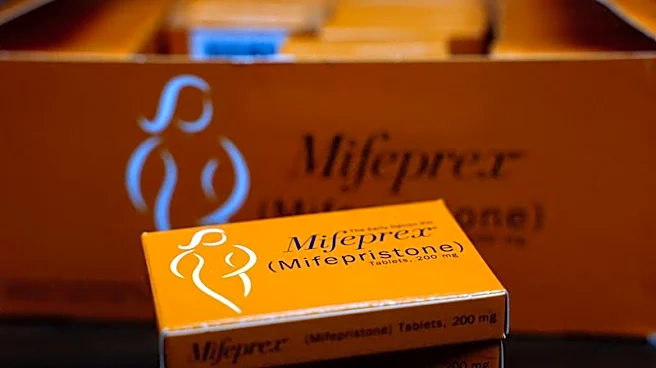
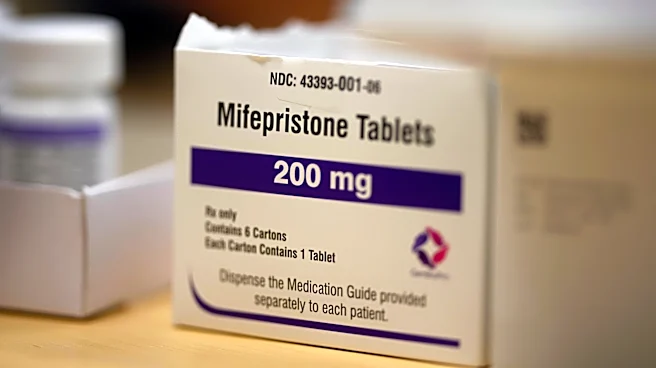
The Supreme Court is being petitioned to keep the abortion drug mifepristone available by mail following a lower court's decision to block its distribution. This request comes after the 5th U.S. Circuit Court of Appeals temporarily reinstated a requirement
for in-person prescriptions, a rule previously eliminated by the Biden administration. Louisiana, supported by several Republican-led states, argues that mailing the drug facilitates nearly 1,000 illegal abortions monthly and poses health risks such as sepsis and hemorrhaging. Danco Laboratories, a manufacturer of mifepristone, has filed an emergency appeal, claiming the ruling causes confusion and disrupts medical decisions. The case highlights ongoing legal battles over abortion access in the U.S., with the Supreme Court's decision potentially impacting the availability of mifepristone nationwide.
Why It's Important?
The outcome of this case could significantly affect abortion access across the United States, particularly in states with stringent abortion laws. Mifepristone is used in nearly two-thirds of abortions in the country, and restricting its mail distribution could limit access for many women, especially those in rural or restrictive states. The case also underscores the broader political and legal struggles over reproductive rights, with implications for public health policy and women's autonomy over their healthcare decisions. The Supreme Court's decision will likely set a precedent for how similar cases are handled in the future, influencing both state and federal regulations on abortion.
What's Next?
The Supreme Court's decision on whether to grant the stay requested by Danco Laboratories will determine the immediate future of mifepristone's availability by mail. If the court sides with the appeals court, the in-person prescription requirement will remain, potentially prompting further legal challenges from abortion rights advocates. Conversely, if the Supreme Court blocks the lower court's ruling, it could reinforce the Biden administration's efforts to maintain broader access to abortion medications. The case may also prompt legislative responses from both pro-choice and anti-abortion groups, seeking to either protect or further restrict access to abortion services.