
What's Happening?
A significant archaeological excavation at the Tower of London has uncovered the remains of up to 50 individuals, rare grave goods, and the foundations of chapels dating back to the 12th century. This
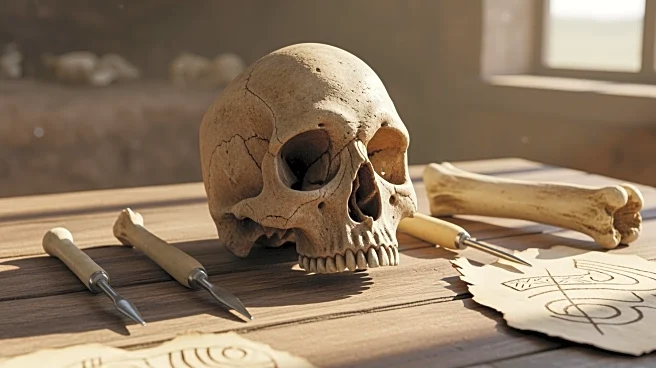
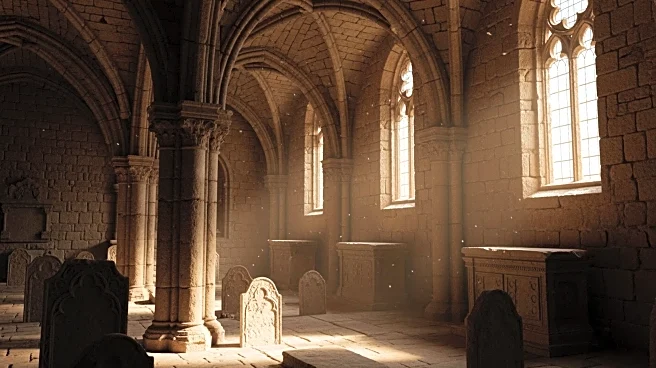
discovery was made during a routine construction project to install a lift at the Chapel Royal of St Peter ad Vincula. The dig, managed by Historic Royal Palaces in collaboration with Pre-Construct Archaeology, revealed evidence of four separate medieval building phases beneath the current Tudor chapel, which was constructed in 1519-1520 under Henry VIII. Among the findings were 22 articulated skeletons and fragments of human bone, many dating from the 13th to the 16th centuries. Some graves contained funerary incense pots, a rare form of grave good in medieval England, typically associated with burial customs from Northern France or Denmark.
Why It's Important?
This excavation provides new insights into the Tower of London's history, highlighting its role not only as a fortress and prison but also as a community and worship site. The discovery of the chapel's foundations and the burials offers a glimpse into the lives and deaths of ordinary people who lived in the shadow of royal power. The presence of rare grave goods and the potential identification of early plague victims could reshape historical understanding of medieval burial practices and the impact of the Black Death in England. These findings contribute to a deeper understanding of the Tower's multifaceted history and its significance in medieval society.
What's Next?
Further analysis, including DNA testing, is expected to confirm the identities and historical contexts of the individuals buried at the site. This could provide more detailed information about the social status and origins of those interred within the chapel grounds. The ongoing study of artifacts and skeletal remains will likely continue to reveal new aspects of life at the Tower of London, potentially leading to revised interpretations of its historical narrative. The project also underscores the importance of archaeological work in uncovering hidden histories and informing public understanding of historical sites.
Beyond the Headlines
The excavation has uncovered not only human remains but also a rich collection of artifacts, including medieval stained and painted glass, a decorated floor tile, sewing needles, a ring, and even cannon balls and a mortar. These items reflect both personal and administrative aspects of life within the Tower, offering a more comprehensive view of its historical role. The discovery of a burial shroud from the 12th or 13th century, preserved by unique soil conditions, provides rare insight into funerary practices of the time. These findings highlight the Tower's complex history and its evolution over centuries.