






What's Happening?
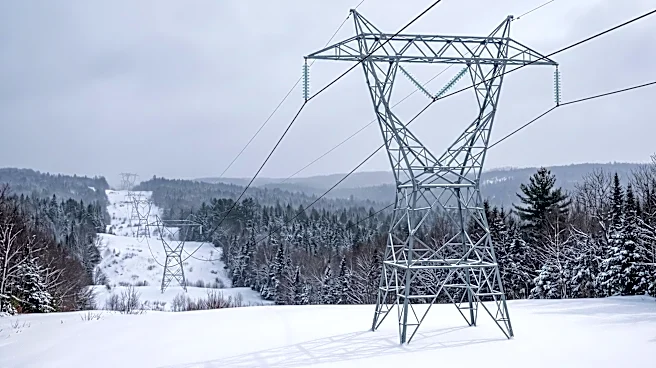
South Korea's Climate Ministry has announced a plan to significantly reduce the number of transmission towers and bury power lines, particularly in residential areas, to mitigate local opposition to new infrastructure projects. The initiative, titled
"Measures to Improve Public Acceptance of Transmission Line Construction," was reported by the Seoul Economic Daily. The core strategy involves merging new transmission lines with existing ones. When a new two-circuit line is required near an existing two-circuit line, the new construction will be a four-circuit line, and the older line will be dismantled. This approach, while potentially more costly due to the construction of larger pylons and demolition work, is deemed worthwhile to prevent construction delays caused by community resistance. The plan will initially be applied to seven 345-kV facilities that transport power from the Honam region, aiming to eliminate 2,214 out of an estimated 4,723 pylons, a reduction of 46.9%.
Why It's Important?
This policy shift by the South Korean government is crucial for the nation's energy infrastructure development and its ability to meet growing power demands. Local opposition to transmission line construction has historically caused significant delays, impacting the timely delivery of electricity and potentially hindering economic growth. By proactively addressing community concerns through reduced visual impact and increased compensation, the government aims to streamline project approvals and accelerate grid expansion. The move also reflects a broader trend in developed nations to balance infrastructure needs with environmental and aesthetic considerations, potentially setting a precedent for future large-scale public works. Successful implementation could lead to more efficient energy distribution, reduced project costs associated with delays, and improved public trust in government-led development initiatives.
What's Next?
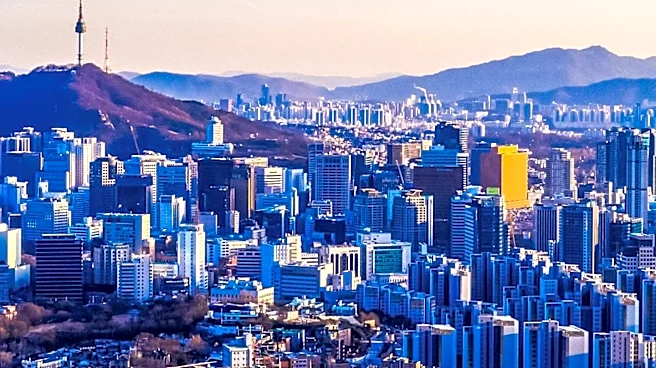
The Climate Ministry plans to aggressively implement underground installation methods in densely populated areas and locations where pylons significantly detract from scenery. Areas within a 2-kilometer radius of 345-kV substations will prioritize underground lines in new construction. Additionally, lines near villages of national merit recipients or cultural heritage sites will be rerouted through revised plans. The ministry also intends to revise relevant laws to allow up to two-thirds of the 2 billion won per kilometer allocated to local governments hosting transmission lines to be used for creating "sunlight income" villages. This aims to provide direct financial benefits to residents, with an estimated average of 3.4 million won per household annually for 83 villages near 73 kilometers of transmission lines. This change seeks to ensure residents feel the direct benefits of hosting energy infrastructure, fostering greater acceptance.
Beyond the Headlines
The South Korean government's strategy highlights a growing recognition of the social license to operate for large infrastructure projects. Beyond the immediate benefits of faster construction and reduced visual pollution, this approach could foster a more collaborative relationship between the government, utility companies, and local communities. By integrating community well-being and environmental considerations into the planning phase, the policy moves beyond mere compensation to create shared value. This could lead to a more sustainable model for infrastructure development, where public acceptance is not just a hurdle to overcome but an integral part of project success. The emphasis on "sunlight income" villages also points to innovative ways of distributing the economic benefits of national infrastructure, potentially reducing socio-economic disparities and enhancing local economic resilience.