




What's Happening?
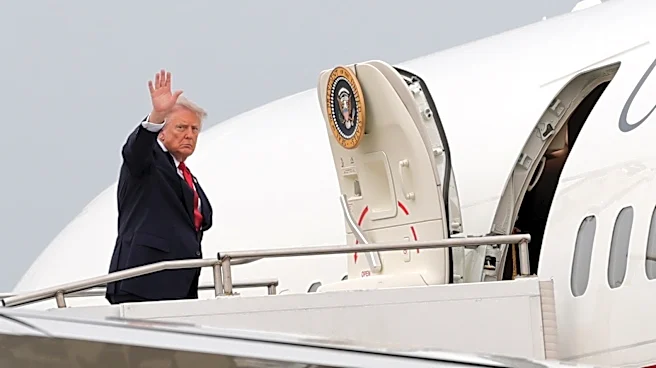
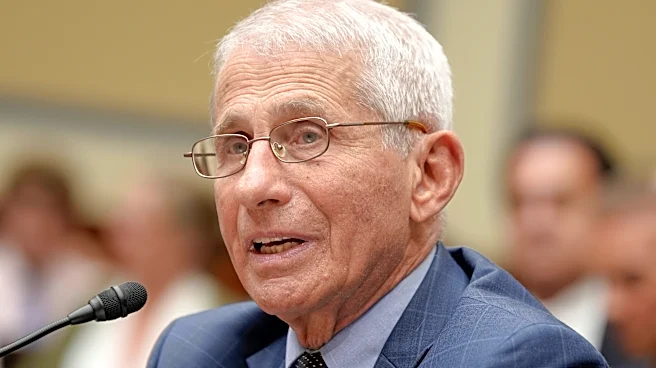
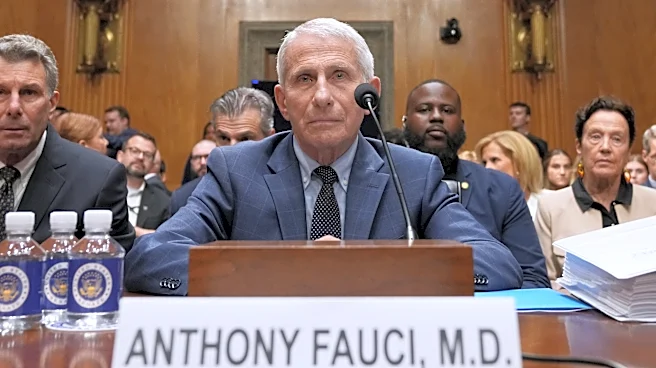
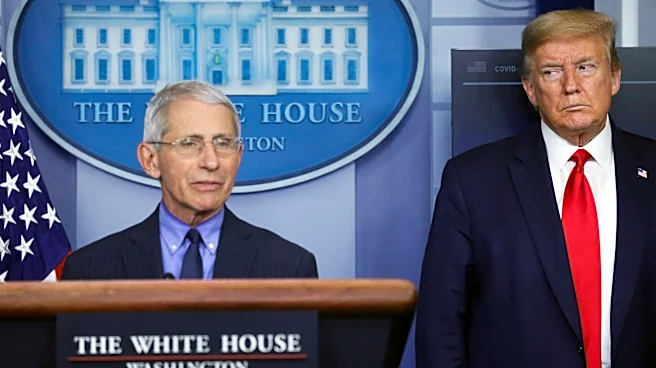
Dr. Anthony Fauci's personal diary, recently released by Sen. Rand Paul, reveals his critical views of President Trump's handling of the COVID-19 pandemic. Fauci, who served as the director of the National Institute of Allergy and Infectious Diseases,
accused Trump of disregarding scientific advice in favor of political motives, particularly in the lead-up to the 2020 election. The diary entries, spanning from December 2019 to December 2022, describe Fauci's frustration with Trump's push to reopen the country and his public attacks on Fauci's credibility. Fauci's diary also reflects on his unexpected rise to fame during the pandemic and his complex relationship with Trump, who initially supported him but later criticized his public health messaging.
Why It's Important?
The release of Fauci's diary provides insight into the internal tensions and challenges faced by public health officials during the pandemic. It underscores the political pressures that can influence public health decisions and the potential impact on policy implementation. Fauci's criticism of Trump highlights the broader debate over the balance between economic considerations and public health measures during a crisis. This revelation may influence public opinion and political narratives, particularly as the U.S. continues to navigate the aftermath of the pandemic and prepare for future public health challenges.
What's Next?
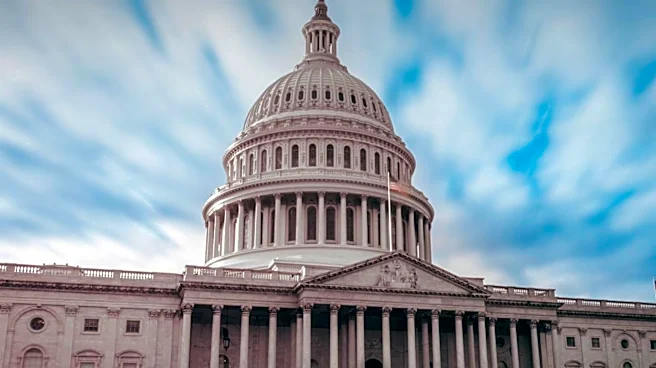
Fauci is scheduled to appear before the Senate Homeland Security and Governmental Affairs Committee, chaired by Sen. Rand Paul, to discuss the origins of COVID-19. This hearing may further explore the tensions between Fauci and Trump, as well as the broader implications of their differing approaches to pandemic management. The outcome of this hearing could impact future public health policies and the political landscape, particularly in relation to accountability and transparency in government decision-making during health crises.