

What's Happening?
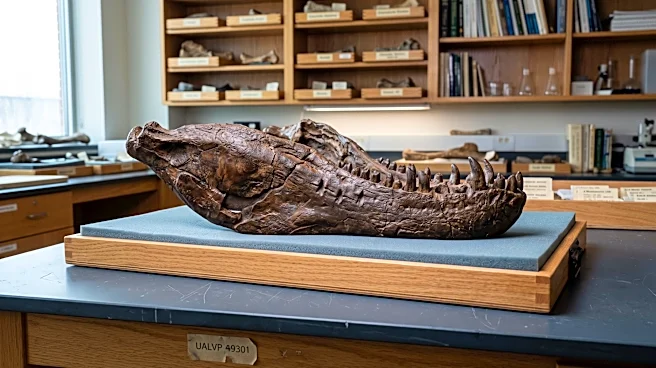
Researchers at the University of Alberta have made a significant discovery regarding dinosaur dietary habits, identifying the first evidence of raptors preying on tyrannosaurs. This finding stems from the analysis of a fossilized lower jaw of an Albertosaurus,
a type of tyrannosaur, which exhibited three distinct tooth marks. The fossil was initially found by a member of the public in 2022 and subsequently examined by technicians at the Royal Tyrrell Museum before being sent to the University of Alberta. Joshua Doyon, the lead researcher and a master’s student, along with his supervisors, spent four years studying the specimen. They concluded that the bite marks were inflicted by another carnivore, most likely a raptor. This discovery is considered rare, as finding evidence of meat-eating dinosaur teeth on other meat-eating dinosaurs is uncommon. The Albertosaurus lived in the late Cretaceous period, approximately 67 to 73 million years ago, in the region that is now Alberta.
Why It's Important?
This discovery is crucial for enhancing the scientific understanding of prehistoric ecosystems and the complex interactions between apex predators during the late Cretaceous period. The finding provides direct evidence of inter-species predation among large carnivorous dinosaurs, specifically between raptors and tyrannosaurs. This insight challenges or refines existing theories about the food chain and predatory behaviors of these ancient creatures. Understanding these dietary behaviors can help paleontologists reconstruct more accurate models of prehistoric environments, including population dynamics, competitive pressures, and the roles different species played within their habitats. The rarity of such fossil evidence makes this discovery particularly valuable, opening new avenues for research into dinosaur ecology and evolution. It also highlights the importance of public contributions to scientific discovery, as this significant find originated from a passerby.
What's Next?
The University of Alberta research team anticipates that this discovery will attract more scientific teams to the Drumheller badlands, where the fossil was found, to conduct further investigations. Professor Philip Currie noted that this finding is likely to generate additional scientific papers, regardless of whether future conclusions align with or diverge from their initial findings. The ongoing analysis of such specimens could lead to a more comprehensive understanding of dinosaur interactions and dietary patterns. Future research may involve searching for similar bite marks on other carnivorous dinosaur fossils or employing advanced analytical techniques to further characterize the nature of these predatory encounters. This discovery could also inspire new paleontological expeditions aimed at uncovering more direct evidence of predator-prey relationships among dinosaurs.
Beyond the Headlines
This discovery goes beyond simply identifying a new dietary habit; it offers a glimpse into the intricate and often brutal realities of prehistoric life. The idea of raptors, often perceived as smaller predators, preying on a tyrannosaur like the Albertosaurus, suggests a more dynamic and complex predatory landscape than previously understood. It could imply that even large apex predators were not immune to predation, especially from coordinated or opportunistic attacks by other carnivores. This finding also underscores the continuous evolution of paleontological understanding, where new fossil evidence can significantly alter long-held assumptions. It reinforces the notion that the fossil record is a rich source of information that, with careful analysis, can reveal surprising details about ancient life, pushing the boundaries of our knowledge about Earth's distant past and the creatures that inhabited it.