






What's Happening?
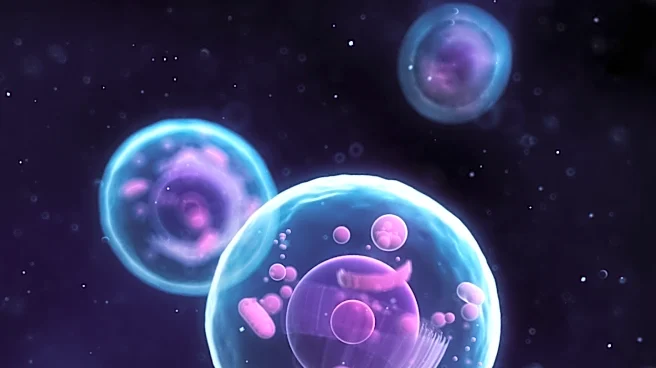
Medical animation videos are being widely used to visualize complex medical, anatomical, physiological, or pharmaceutical concepts that are difficult to describe with words. These videos, produced in both 2D and 3D formats, serve various purposes for pharmaceutical companies,
medtech manufacturers, hospitals, and medical schools. They are commissioned for training, marketing, and patient consent, illustrating processes such as how a drug binds to a cell receptor, how a device deploys inside the body, or the progression of a disease. While 2D animation offers clearer, simpler overviews for patient education, 3D animation provides anatomically accurate models for spatial understanding, crucial for surgical, device, and mechanism-of-action content.
Why It's Important?
The use of medical animation is critical for enhancing understanding and communication within the healthcare sector. For patients, these videos simplify complex medical procedures and conditions, enabling genuinely informed consent and reducing anxiety. For medical professionals, they serve as invaluable training tools, allowing for detailed visualization of surgical techniques and drug mechanisms. In the pharmaceutical and medtech industries, animations are essential for explaining product functionalities to investors and healthcare providers, accelerating adoption and market understanding. The ability to visualize microscopic or internal bodily processes improves educational outcomes and can lead to better patient care and more effective medical device development. The choice between 2D and 3D animation is strategic, tailored to the audience and the specific information being conveyed, optimizing clarity and accuracy.
What's Next?
The field of medical animation is evolving with the integration of AI-generated video. While traditional studio productions remain essential for regulatory and high-stakes clinical content due to their deterministic accuracy and expert vetting, AI is emerging as a tool for concept previews, lower-stakes patient education, and marketing teasers. AI-generated videos can produce drafts in hours to days, significantly reducing turnaround time and cost for initial concepts. However, the probabilistic nature of AI models means that expert review is still crucial, especially for content requiring frame-level anatomical precision. Future developments will likely see a hybrid approach, where AI assists in the early stages of content creation, and human experts and traditional studios refine and validate the final, critical medical animations.
Beyond the Headlines
The increasing sophistication of medical animation, particularly with the advent of AI, raises profound implications for medical literacy and public health. By making intricate biological and procedural information accessible, these animations can empower individuals to take a more active role in their healthcare decisions. However, the reliance on AI also introduces challenges related to accuracy and ethical considerations, especially in a field where precision can have life-or-death consequences. Ensuring that AI-generated medical content undergoes rigorous expert review and validation will be paramount to maintaining trust and preventing misinformation. This technological advancement also highlights the growing demand for interdisciplinary professionals who possess expertise in both medical science and digital media production, shaping the future of health communication and education.