


What's Happening?
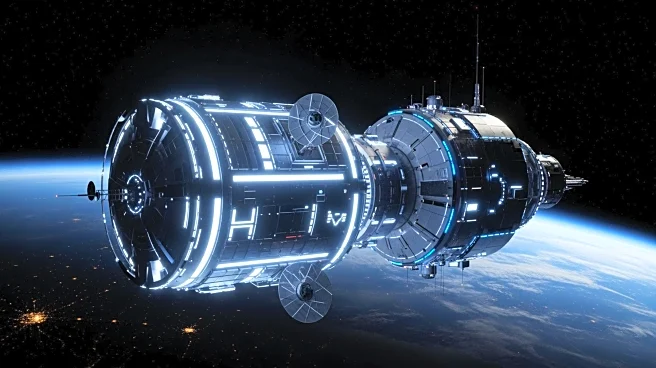
NASA and its international partners are celebrating 25 years of continuous human habitation and technological advancements aboard the International Space Station (ISS). Since November 2000, the ISS has served as a platform for developing technologies
crucial for future lunar and Mars missions. Key advancements include robotic technologies like the Canadarm2 and Astrobee free-flyers, which assist in satellite maintenance and space debris reduction. The station's life support systems recycle air and water, crucial for long-duration missions. Additionally, the ISS has advanced 3D printing technology, enabling the production of tools and parts in space, and has contributed to solar power research, improving energy efficiency for future missions.
Why It's Important?
The technological advancements made on the ISS are pivotal for NASA's Artemis campaign and future human exploration of Mars. Robotic technologies developed on the ISS enhance satellite maintenance and reduce space debris, while life support systems that recycle air and water are essential for sustaining life on long-duration missions. The ability to 3D print tools and parts in space reduces the need for resupply missions, making deep space exploration more feasible. Solar power research conducted on the ISS has led to more efficient energy solutions, which are critical for sustainable space missions. These advancements not only support space exploration but also have potential applications on Earth, such as improving resource management and energy efficiency.
What's Next?
As NASA prepares for Artemis missions to the Moon, the ISS will continue to serve as a testing ground for new technologies. Future developments may include more advanced robotic systems, improved life support technologies, and further advancements in 3D printing capabilities. These innovations will be crucial for the success of lunar and Mars missions. The ISS will also continue to play a role in STEM education, inspiring the next generation of scientists and engineers. As the station evolves, it will remain a vital component of international collaboration in space exploration.