
What's Happening?
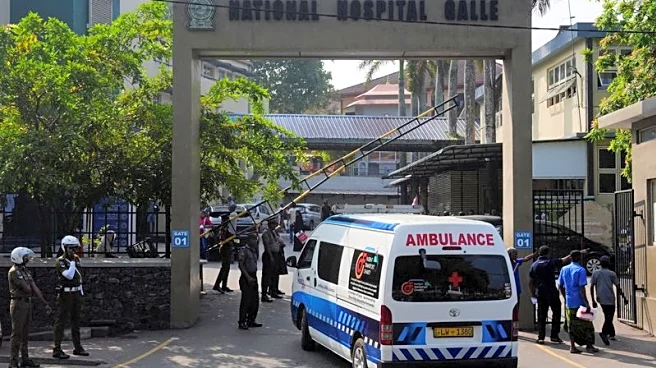
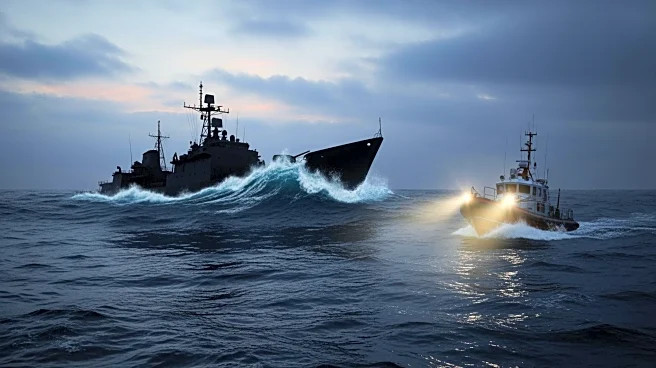
An Iranian logistical vessel has requested emergency docking at Colombo port in Sri Lanka following the sinking of the Iranian frigate Iris Dena by a US submarine. The incident, which resulted in the death of at least 87 Iranian sailors, occurred as the frigate was
returning from a military exercise in India. The Sri Lankan government is currently deliberating on whether to grant the docking request. The Iranian ship, reportedly carrying over 100 crew members, is within 10 nautical miles of Sri Lanka's western coast. The US attack on the Iris Dena marks a significant escalation in the ongoing US-Israeli conflict with Iran, extending the conflict beyond the Middle East. Iran's Foreign Minister Abbas Araghchi condemned the attack, stating it was an unprovoked act in international waters.
Why It's Important?
The sinking of the Iris Dena by the US represents a significant escalation in tensions between the US and Iran, with potential implications for regional security and international relations. The incident could strain US relations with other countries in the region, including Sri Lanka, which is now involved due to the emergency docking request. The attack also highlights the risks of military engagements in international waters, potentially affecting global maritime security and trade routes. The situation may lead to increased military presence and heightened alertness in the region, impacting global oil prices and economic stability.
What's Next?
The Sri Lankan government is expected to make a decision on the Iranian ship's docking request soon. Meanwhile, the US and Iran may engage in diplomatic or military responses, potentially involving other regional and global powers. The international community will likely monitor the situation closely, with possible calls for de-escalation and diplomatic resolutions. The incident may also prompt discussions on international maritime law and the rules of engagement in international waters.