



What's Happening?
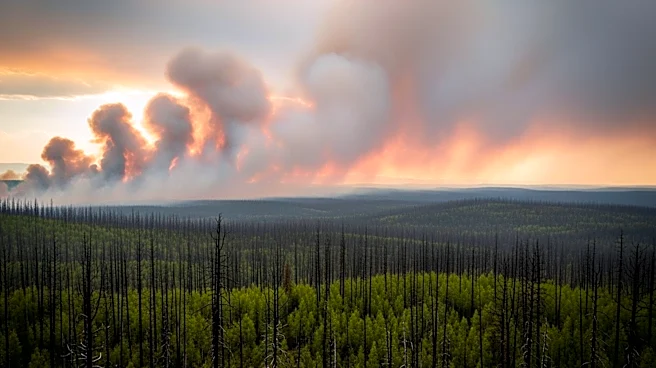
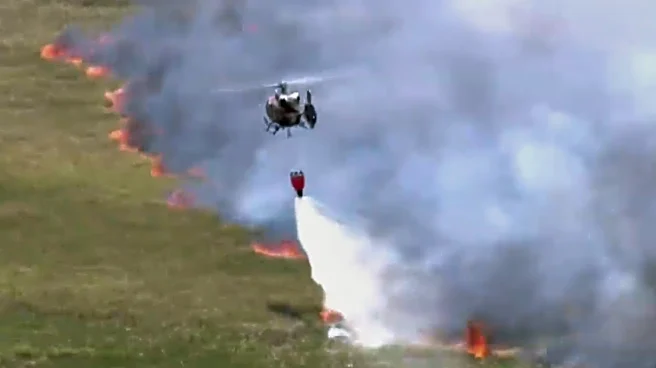
A significant wildfire in southern Georgia has burned over 16,000 acres and is only 10% contained, according to the Clinch County Fire Department. The fire, which began on Saturday, is creating challenging conditions due to its ability to generate its own
weather and wind patterns, making containment efforts difficult. Scott Griffin, president and CEO of Superior Pine Products Co., noted that the fire is jumping fire lanes and spotting, necessitating continuous efforts from firefighters. The blaze has crossed toward the Suwannochee River near the Clinch and Echols County line. In response to the escalating situation, Georgia's State Forester has issued a burn ban for 91 counties in the lower half of the state. The ban is a precautionary measure as 98% of Georgia's land area is experiencing moderate to exceptional drought conditions, increasing the risk of wildfires.
Why It's Important?
The wildfire and subsequent burn ban highlight the severe drought conditions affecting Georgia, which have led to an increase in the number of wildfires statewide. The situation poses a significant threat to public safety and the environment, as wildfires can lead to property damage, air quality issues, and potential loss of life. The smoke from the fire has already impacted areas such as the CSRA, affecting daily activities and prompting schools to hold indoor recess. The burn ban is crucial in preventing additional fires, as even a single spark can ignite a life-threatening blaze. The ongoing drought and wildfire risk underscore the need for effective fire management and drought mitigation strategies in the region.
What's Next?
Firefighters will continue to work around the clock to contain the wildfire, with efforts expected to persist as the fire exhibits extreme behavior similar to daytime conditions during the night. The Georgia Forestry Commission will maintain close collaboration with local responders to combat wildfires and address the drought. The burn ban will remain in effect until conditions improve, and residents are urged to comply with the restrictions to prevent further incidents. Monitoring of weather patterns and drought conditions will be essential in determining future actions and lifting the ban.
Beyond the Headlines
The wildfire and drought conditions in Georgia may prompt discussions on climate change and its impact on regional weather patterns. The increasing frequency and intensity of wildfires could lead to long-term shifts in land management practices and policies aimed at reducing fire risks. Additionally, the situation may drive innovation in firefighting techniques and equipment, as well as increased investment in drought-resistant infrastructure and water conservation measures.