






What's Happening?
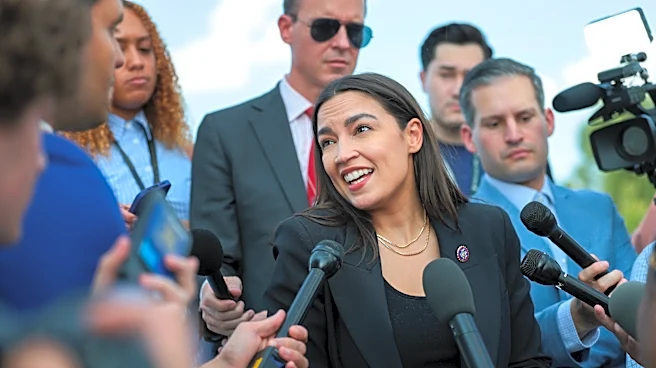
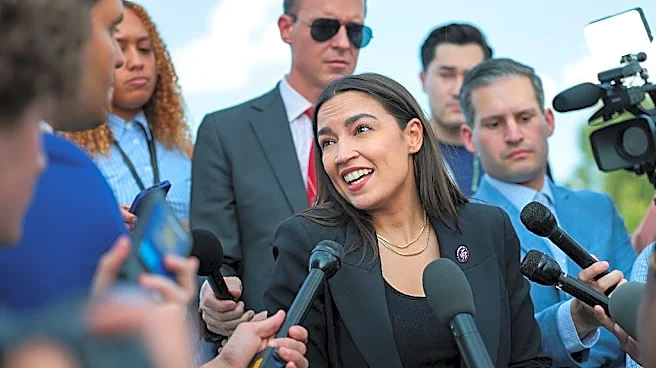
U.S. Congresswoman Alexandria Ocasio-Cortez, a prominent democratic socialist from New York, has recently faced backlash for comments made on ABC's 'This Week' regarding the 2020 social justice protests. When asked about demands to abolish prisons and police,
Ocasio-Cortez referred to the 2020-era rhetoric as 'Woke 1' and 'crazyyyyy,' effectively disavowing her previous support for the 'defund the police' movement. This shift in stance has drawn criticism from leftists who view it as an attempt to appease the Democratic establishment. In 2020, Ocasio-Cortez had advocated for reducing police budgets and diverting funds to community services, stating that 'affluent white communities already live in a world where they choose to fund youth, health, housing more than they fund police.' However, she now asserts that 'rhetoric in that time is not rhetoric that we would use today,' emphasizing the goal of achieving the lowest possible crime rate. This change in position has been echoed by other progressive figures, such as New York City Council member Zohran Mamdani, who suggested that beliefs can evolve.
Why It's Important?
This shift in rhetoric from a high-profile progressive figure like Alexandria Ocasio-Cortez is significant because it highlights a potential strategic realignment within the Democratic Party regarding criminal justice reform. The 'defund the police' movement, which gained considerable traction during the 2020 protests, aimed to reallocate police funding to social services and community-based initiatives. Ocasio-Cortez's retraction, and her use of the term 'Woke 1'—a phrase often employed by conservatives to disparage progressive movements—suggests a move towards more centrist positions. This could impact the Democratic Party's platform in future elections, potentially alienating a segment of its progressive base while attempting to appeal to a broader electorate concerned with crime rates. The debate also underscores the ongoing tension between grassroots activism and established political parties, and how political figures navigate evolving public sentiment and electoral pressures. For activists, this represents a setback, as it indicates a dilution of radical policy demands within mainstream political discourse.
What's Next?
The immediate consequence of Ocasio-Cortez's comments is likely to be continued debate and division within progressive circles and the broader Democratic Party. Leftist groups and advocates for police reform may intensify their criticism, potentially leading to internal party conflicts and challenges to incumbent Democrats who adopt similar stances. Conversely, this shift could be seen by some as a pragmatic move to broaden the party's appeal, especially in the lead-up to future elections, including a potential 2028 White House bid for Ocasio-Cortez. The use of conservative-co-opted terminology like 'Woke 1' by liberal figures may also further entrench the term in political discourse, potentially making it harder for progressive movements to articulate their goals without being framed by this label. The long-term impact will depend on whether this represents an isolated instance or a broader trend of progressive politicians moderating their positions on issues like policing and social justice.
Beyond the Headlines
The deeper implications of Ocasio-Cortez's comments extend to the evolving nature of political language and the co-option of terms. The word 'woke,' originally a term of empowerment within Black American communities to signify awareness of systemic injustices, has been weaponized by conservative media and politicians to mock and discredit progressive movements. Ocasio-Cortez's adoption of 'Woke 1' to describe past progressive demands, even in a jocular manner, risks legitimizing this conservative framing and further eroding the original meaning and intent of the term. This linguistic shift can have profound cultural and political consequences, as it shapes public perception and limits the scope of acceptable political discourse. It also raises questions about the authenticity of political figures' commitments to radical change when faced with mainstream pressure, and the challenges of maintaining a consistent progressive stance within a two-party system often geared towards centrist consensus. The incident highlights the ongoing struggle for control over narratives and definitions in the political arena.