





What's Happening?
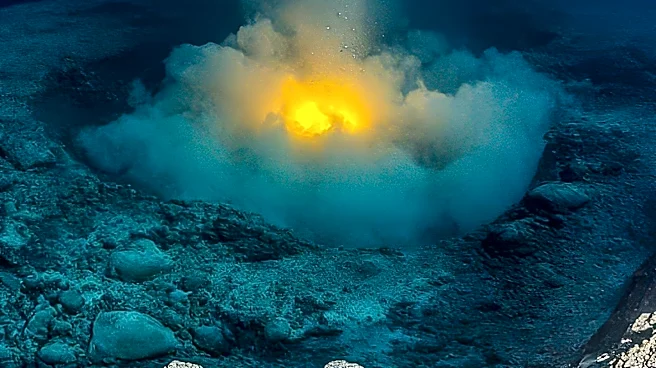
Scientists have discovered 'dark oxygen' being produced by polymetallic nodules 4,000 meters below sea level in the Clarion-Clipperton Zone (CCZ) of the Pacific Ocean. These nodules, rich in metals like nickel and cobalt, are crucial for green energy
technologies. The discovery challenges existing theories about oxygen production, traditionally attributed to photosynthesis, and raises questions about the origins of aerobic life on Earth. The findings complicate ongoing debates about deep-sea mining, as the nodules' ecological role is not fully understood.
Why It's Important?
The discovery of 'dark oxygen' has significant implications for our understanding of ocean ecosystems and the origins of life on Earth. It suggests that oxygen can be produced in the absence of light, potentially reshaping theories about how life began. This finding also impacts the debate over deep-sea mining, as it highlights the ecological importance of polymetallic nodules beyond their economic value. The results call for a reevaluation of mining practices and underscore the need for further research to understand the environmental impact of exploiting these resources.
What's Next?
The discovery is likely to influence international policy discussions on deep-sea mining, with calls for a moratorium or precautionary pause to allow for more research. Scientists and environmentalists will likely advocate for increased protection of deep-sea ecosystems, emphasizing the need to balance resource extraction with conservation. Further studies will be needed to explore the mechanisms behind 'dark oxygen' production and its implications for marine life and global oxygen cycles.