




What's Happening?
Residents of Ascension Parish, Louisiana, voiced significant concerns regarding the proposed $5.8 billion Hyundai-POSCO Louisiana Steel Plant during a public hearing held by the Louisiana Department of Environmental Quality (DEQ). The hearing, which took
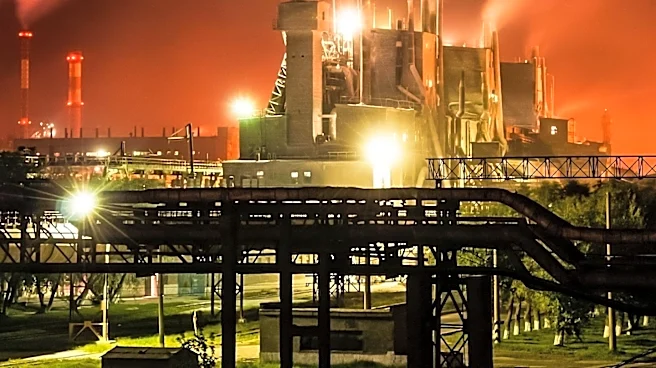
place at the Lemann Memorial Center in Donaldsonville, focused on the plant's air permit, just days before its scheduled groundbreaking. While Hyundai-POSCO representatives highlighted the facility's use of electric arc technology, claiming a 70% reduction in emissions compared to traditional methods, local residents and environmental groups like the Sierra Club and Louisiana Bucket Brigade expressed skepticism. They pointed out that Ascension Parish already ranks among the top 10 parishes nationwide for air pollution and fear the new plant will exacerbate existing environmental burdens. Beyond environmental impacts, residents also raised questions about job creation, specifically whether the promised thousands of jobs would genuinely benefit local community members or primarily go to out-of-state workers. The public comment period for the air permit remains open until September 15.
Why It's Important?
This situation highlights the complex balance between economic development and environmental protection in U.S. industrial projects. The Hyundai-POSCO plant, Hyundai Motor Group's first steel production facility in North America, is projected to produce 2.7 million metric tons of steel annually and create over 1,300 direct jobs with an average salary of $95,000, alongside an estimated 4,100 indirect jobs. This represents a substantial economic investment in the region. However, the strong community opposition underscores a growing demand for corporate transparency and accountability, particularly in areas already facing environmental challenges. The residents' concerns about air quality and equitable job opportunities reflect broader societal shifts towards prioritizing community well-being and environmental justice alongside industrial growth. The outcome of the DEQ's decision on the air permit will set a precedent for how large-scale industrial projects navigate environmental regulations and community engagement in Louisiana and potentially other states.
What's Next?
The Louisiana Department of Environmental Quality (DEQ) will continue to accept public comments on the Hyundai-POSCO plant's air permit until September 15. Following this period, the DEQ will make a decision regarding the permit's approval. Despite the ongoing public hearing process and unresolved concerns, Hyundai-POSCO is scheduled to hold a groundbreaking ceremony for the facility on Friday. This move has been questioned by some residents and activists, who argue that a groundbreaking should not proceed while the permit is still under review. Major stakeholders, including local residents, environmental advocacy groups, and elected officials, will be closely watching the DEQ's decision and the plant's subsequent development. The community groups, such as Good Neighbors Louisiana, have indicated their intent to continue advocating for stronger environmental standards and greater transparency from Hyundai-POSCO, suggesting potential further actions depending on the DEQ's ruling.
Beyond the Headlines
The controversy surrounding the Hyundai-POSCO steel plant in Ascension Parish delves into deeper issues beyond immediate environmental and economic impacts. It exposes the long-standing tension between industrial expansion and the well-being of historically marginalized communities, often referred to as 'Cancer Alley' due to the concentration of petrochemical facilities. Residents' sentiments, as articulated by Louisiana Bucket Brigade Director Anne Rolfes, suggest a pattern of neglect in these communities, where industrial projects are presented as solutions after decades of environmental burden. This raises ethical questions about corporate responsibility and the equitable distribution of both economic benefits and environmental costs. The debate also highlights the challenge of defining 'environmentally friendly' in industrial processes, as even advanced technologies like electric arc furnaces, while cleaner than older methods, still generate emissions. The community's demand for written commitments from Hyundai-POSCO, rather than just verbal assurances, reflects a broader distrust in corporate promises and a call for legally binding agreements to protect local populations and ensure genuine community benefits.