






What's Happening?
The ongoing conflict involving Iran has significantly impacted global agricultural markets, particularly affecting the availability and cost of key inputs like urea fertilizer and fuel. This disruption is causing challenges for farmers in Asia, including
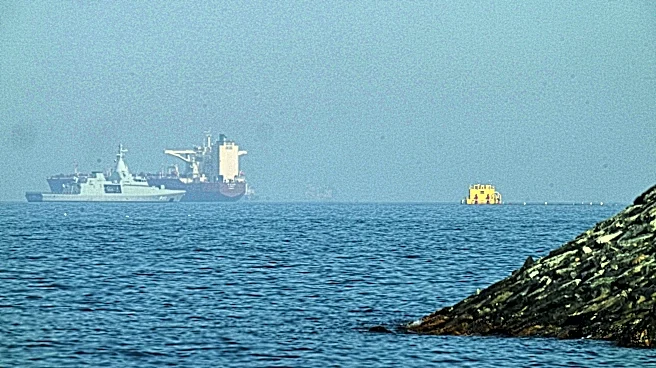
Thailand, the Philippines, Bangladesh, and Australia, who are entering critical planting periods. The Washington Post reports that the conflict has led to a sharp increase in spot-market prices for urea, a nitrogen-based fertilizer essential for crop yield enhancement. The Persian Gulf and the Strait of Hormuz, crucial routes for agricultural inputs, are experiencing supply pressures, limiting access to these vital resources. As a result, farmers are delaying or reducing planting, scaling back cultivation, or leaving land unplanted due to rising production costs that exceed expected sales revenue. The situation is exacerbated by the fact that many farmers were already reliant on loans before the conflict, and the increased costs could push them further into debt.
Why It's Important?
The disruptions in the global agricultural supply chain have significant implications for U.S. commodity markets. As the conflict affects the availability of fertilizers and fuels, it could lead to increased costs for U.S. farmers, impacting their profitability and potentially leading to higher food prices domestically. The U.S. agricultural sector, which relies on global supply chains for inputs, may face challenges in maintaining production levels, affecting both domestic supply and export capabilities. Additionally, the increased demand for fertilizers in countries like India and Brazil could further strain global supplies, leading to higher prices and potential shortages. This situation underscores the interconnectedness of global agricultural markets and the potential for geopolitical conflicts to have far-reaching economic impacts.
What's Next?
As the conflict continues, stakeholders in the agricultural sector, including policymakers and industry leaders, will need to explore alternative supply sources and strategies to mitigate the impact on farmers. This may involve seeking new trade agreements or investing in domestic production capabilities for key inputs like fertilizers. Additionally, there may be increased pressure on governments to provide financial support or subsidies to farmers facing rising costs. The situation also highlights the need for greater resilience in global supply chains to withstand geopolitical disruptions. Monitoring developments in the Middle East and their impact on global trade will be crucial for anticipating further changes in agricultural markets.
Beyond the Headlines
The ongoing conflict and its impact on agricultural markets raise broader questions about food security and the sustainability of current agricultural practices. The reliance on imported fertilizers and fuels highlights vulnerabilities in the global food system, prompting discussions about the need for more sustainable and self-sufficient agricultural practices. This situation may accelerate efforts to develop alternative fertilizers or more efficient farming techniques that reduce dependency on external inputs. Additionally, the financial strain on farmers could lead to increased consolidation in the agricultural sector, with larger entities better positioned to absorb rising costs, potentially impacting rural economies and community structures.