



What's Happening?
NASA Administrator Jared Isaacman testified before the US House Science Committee about the condition of the Gateway space station modules, revealing that the two habitable volumes delivered were corroded. This issue could delay the program beyond 2030.
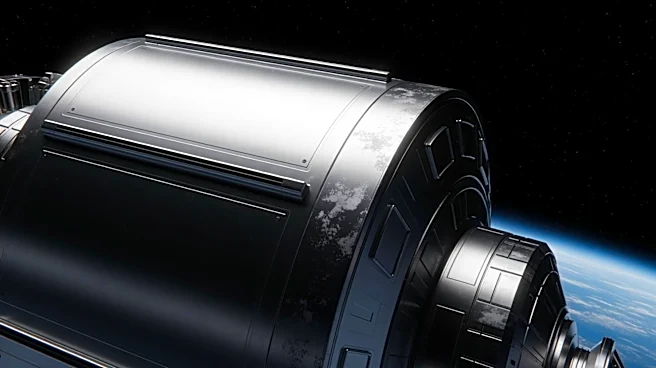
The modules in question are believed to be the Habitation and Logistics Outpost (HALO) and the International Habitation Module (I-HAB). The European Space Agency (ESA) confirmed that HALO showed signs of corrosion upon delivery, while I-HAB had a similar but less severe issue. ESA has initiated a comprehensive investigation into the corrosion, which is believed to be technically manageable. Other elements, such as the life support system and thermal control pump, are also experiencing delays.
Why It's Important?
The corrosion issues and potential delays in the Gateway space station program could have significant implications for NASA's timeline and objectives in space exploration. Delays could impact international collaborations and the overall schedule for lunar exploration and other missions. The technical challenges faced by the modules highlight the complexities involved in space station construction and maintenance. The situation underscores the importance of addressing technical and logistical challenges in space programs to avoid setbacks in achieving strategic goals.
What's Next?
NASA is exploring the potential repurposing of Gateway elements for a planned surface base, though it remains unclear if this includes HALO and I-HAB. Efforts to restore these elements may continue, and further investigations into the corrosion issues are expected. The outcome of these efforts will likely influence future decisions regarding the Gateway program and its role in NASA's broader space exploration strategy.