








What's Happening?
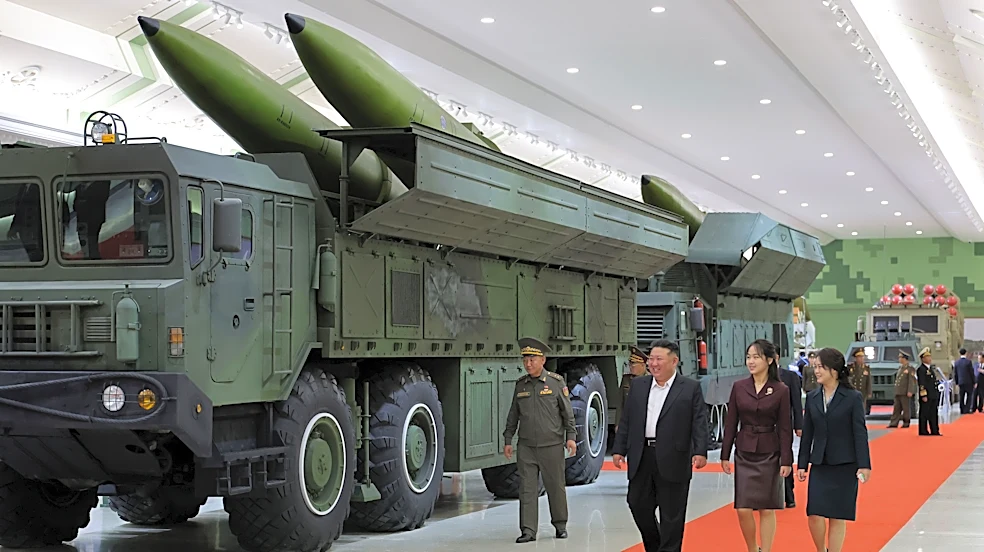
North Korea has publicly reiterated its commitment to strengthening relations with Russia, characterizing their ties as an 'invincible' comradeship. This reaffirmation occurred during a diplomatic event hosted by the North Korean Embassy in Russia, commemorating
the 78th anniversary of diplomatic relations between the two nations. The Korean Central News Agency (KCNA) reported on the event, which saw attendance from Russian officials, including Alexander Kozlov, Russia's minister of natural resources and chair of the North Korea-Russia Intergovernmental Committee for Cooperation in Trade, Economy and Science. North Korean Ambassador to Russia Sin Hong-chol highlighted the unprecedented development of bilateral ties, attributing it to the 'most truthful' relations between North Korean leader Kim Jong-un and Russian President Vladimir Putin. The ambassador noted that a meeting between their leaders in 2024 elevated bilateral ties to a comprehensive strategic partnership, moving towards 'invincible comradely-in-arms relations.' Kozlov, in turn, stated that the comprehensive strategic partnership treaty signed by Kim and Putin in June 2024 reflects a shared commitment to 'respect, trust and common prosperity.' This treaty includes a provision for mutual military assistance in the event of an attack on either side.
Why It's Important?
The declared 'invincible' comradeship between North Korea and Russia, underscored by a mutual defense treaty, carries significant implications for global security and regional stability, particularly for the United States and its allies. This deepening alliance could embolden both nations in their respective geopolitical strategies, potentially complicating international efforts to address issues such as nuclear proliferation and regional conflicts. For the U.S., this partnership could necessitate a re-evaluation of defense postures and diplomatic strategies in East Asia and Eastern Europe. The provision for mutual military assistance in the event of an attack suggests a more formalized and robust security alignment, which could escalate tensions in existing flashpoints. It also signals a potential challenge to the U.S.-led international order, as both countries seek to counter perceived Western influence. The increased cooperation could also facilitate the exchange of military technology and resources, potentially enhancing the capabilities of both nations in ways that concern U.S. national security interests.
What's Next?
Following the reaffirmation of their 'invincible' comradeship and the existence of a mutual defense treaty, North Korea and Russia are likely to continue exploring avenues for enhanced cooperation across various sectors. This could include further military exercises, economic exchanges, and diplomatic coordination on international platforms. The U.S. and its allies will likely monitor these developments closely, potentially increasing intelligence gathering and diplomatic efforts to understand the full scope of this partnership. There may be discussions within international bodies, such as the United Nations, regarding the implications of this alliance for global peace and security. Sanctions regimes against both nations could be reviewed or expanded in response to perceived threats. Furthermore, regional powers like South Korea and Japan, key U.S. allies, may bolster their defense capabilities and strengthen their own alliances in response to the evolving security landscape.
Beyond the Headlines
The deepening alliance between North Korea and Russia extends beyond immediate military and economic considerations, touching upon broader ideological and strategic shifts in the international arena. This partnership can be viewed as a manifestation of a growing alignment among states that challenge the existing U.S.-centric global order. Ethically, the mutual defense pact raises concerns about the potential for unchecked aggression and the erosion of international norms, particularly given North Korea's history of human rights abuses and its nuclear ambitions. Legally, the treaty's implications for international law and the principle of non-aggression will be scrutinized, especially if it is invoked in future conflicts. Culturally, this alliance could foster a narrative of solidarity against perceived Western hegemony, potentially influencing public opinion and political discourse in other non-aligned or anti-Western nations. The long-term shift could be towards a more fragmented and multipolar world, where alliances are formed based on shared opposition to dominant powers rather than shared democratic values or economic systems.