



What's Happening?
An Eden Prairie resident, Scot Adams, is advocating for bipartisan federal legislation to accelerate the approval process for clean energy projects and reduce the nation's dependence on fossil fuels. Adams highlights that a significant barrier to clean energy deployment
is the complex and slow permitting system, which he describes as a 'Rube Goldberg' process. He notes that over 90% of projects awaiting interconnection approval are clean energy initiatives, and delays often lead to project cancellations as investors seek quicker returns elsewhere. Adams points to the Bipartisan American Affordability and Jobs Act (BAAJA) as a potential solution. This legislation, introduced by Senator Capito (R-WV) and co-sponsored by both Democrats and Republicans, aims to streamline the permitting system. While technology-neutral, its primary impact would be to advance clean energy projects due to their high representation in the current project queue.
Why It's Important?
This call for action underscores a critical challenge in the U.S. transition to a clean energy economy: bureaucratic hurdles. The current permitting delays not only slow down the deployment of renewable energy but also deter investment, hindering job creation and economic growth in the clean energy sector. Expediting these projects through bipartisan legislation like BAAJA could unlock significant economic potential, fostering innovation and establishing American leadership in green technologies. Furthermore, reducing reliance on fossil fuels addresses multiple national concerns, including exposure to pollution, energy price volatility caused by international conflicts, and climate change. For U.S. industries, a streamlined approval process means faster project completion, more predictable investment environments, and a competitive edge in the global clean energy market. For consumers, it could lead to more stable and potentially lower energy costs.
What's Next?
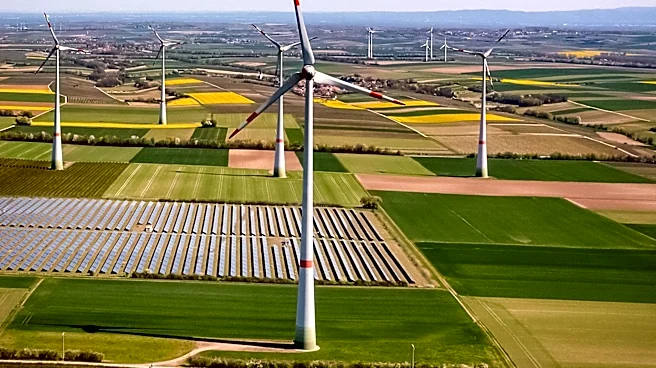
The immediate next step involves encouraging broader support for the Bipartisan American Affordability and Jobs Act (BAAJA) among U.S. Senators. Adams specifically urges Senators Klobuchar and Smith to join in supporting the bill. If passed, BAAJA would significantly reform the federal permitting system, potentially accelerating the deployment of numerous clean energy projects currently in the 'interconnection queue.' This could lead to a surge in construction and operation of solar, wind, and other renewable energy facilities across the country. The success of such legislation would also demonstrate the viability of bipartisan cooperation on critical infrastructure and environmental issues, potentially paving the way for further collaborative efforts in energy policy. Conversely, continued delays in permitting could perpetuate the current challenges, slowing the clean energy transition and its associated economic and environmental benefits.
Beyond the Headlines
The issue of permitting reform for clean energy projects extends beyond mere bureaucratic efficiency; it touches upon the fundamental balance between environmental protection, economic development, and regulatory oversight. The 'Rube Goldberg' analogy highlights a system that, while perhaps intended to ensure thorough review, has become an impediment to progress. This situation raises questions about how to design regulatory frameworks that are both robust and agile enough to meet urgent national priorities like climate change mitigation and energy independence. The bipartisan nature of BAAJA, as noted by Adams, suggests a potential shift in political will, recognizing that streamlining processes for clean energy is a shared national interest. This could set a precedent for future legislative efforts, emphasizing practical solutions over ideological divides in addressing complex challenges facing the U.S. energy landscape.