



What's Happening?
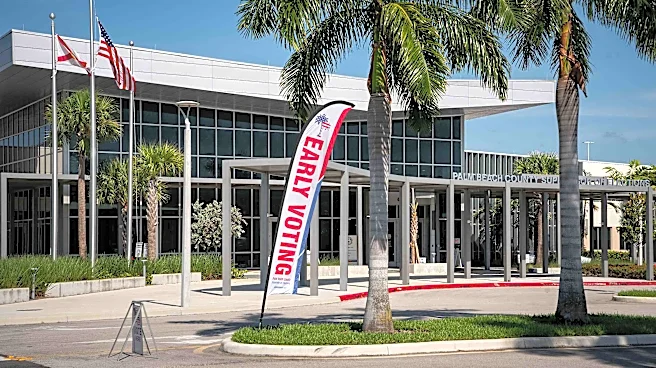
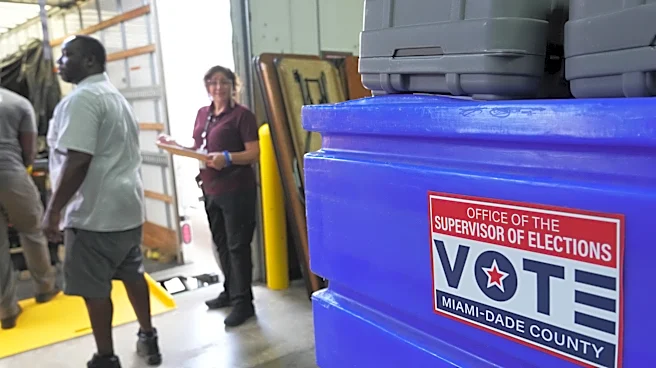
Voters across Miami-Dade, Broward, and Monroe counties in South Florida participated in the 2026 primary election. Polls opened at 7 a.m. and closed at 7 p.m. on Tuesday. Florida operates as a closed-primary state, meaning that generally, voters can only
cast ballots for candidates affiliated with the political party they are registered under. However, all registered voters were eligible to participate in applicable nonpartisan races and universal primary contests. The ballots presented a variety of federal, state, and local races, which varied depending on the voter's location and party affiliation. These included party primaries for Florida governor, U.S. Senate, congressional, and state legislative races, alongside various nonpartisan contests.
Why It's Important?
The 2026 primary election in South Florida is a crucial step in determining the candidates who will advance to the general election. As a closed-primary state, Florida's system emphasizes party affiliation in the initial selection process, which can significantly shape the political landscape for the general election. The diverse range of races, from gubernatorial to local legislative seats, underscores the comprehensive nature of the democratic process and its impact on various levels of governance. The participation of voters in these primaries is essential for selecting representatives who will address key issues relevant to their communities, such as economic development, healthcare, and education. The outcomes of these primaries will set the stage for the broader political contests in the upcoming general election.
What's Next?
With the polls now closed, the focus shifts to the tabulation and announcement of election results across Miami-Dade, Broward, and Monroe counties. As results become available, the winning candidates for each primary race will be identified, officially securing their nominations for the general election. These nominees will then begin their campaigns for the general election, where they will compete against candidates from other parties and independents. The results will also provide insights into voter sentiment and potential trends that could influence the general election outcomes. Political analysts and campaigns will closely examine these primary results to refine their strategies and messaging for the upcoming electoral contests.
Beyond the Headlines
The primary election in South Florida, particularly in a closed-primary state like Florida, highlights the strategic importance of party registration and voter engagement within specific party lines. The varying turnout rates across different counties and demographics can offer insights into the enthusiasm and mobilization efforts of different political factions. Furthermore, the inclusion of nonpartisan and universal primary contests allows for broader voter participation beyond strict party affiliations, reflecting a nuanced approach to democratic representation. The outcomes of these primaries can also signal shifts in local political power, the emergence of new political figures, or the continued dominance of established ones, all of which contribute to the evolving political narrative of the region and the state.