



What's Happening?
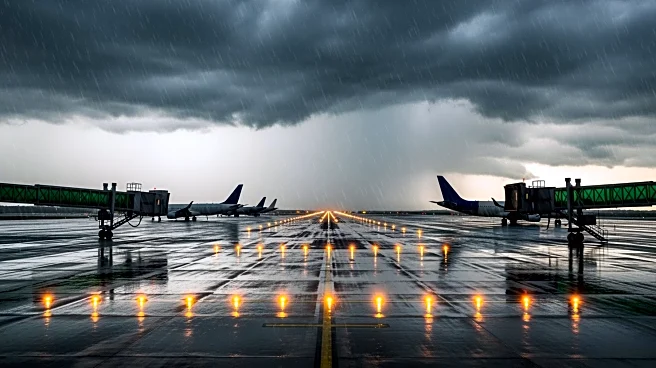
Severe weather conditions and a Transportation Security Administration (TSA) pay freeze have resulted in the cancellation of more than 2,000 flights across the United States. Major airports, including Hartsfield-Jackson Atlanta International Airport and Charlotte
Douglas International Airport, experienced ground stops, while George Bush Intercontinental Airport in Houston faced ground delays. Transportation Secretary Sean Duffy reported that, in addition to the canceled flights, there were over 9,500 delays nationwide. The storms are expected to impact the Midwest and Northeast regions, further complicating travel plans for many Americans.
Why It's Important?
The widespread flight cancellations and delays have significant implications for the U.S. travel industry and the economy. The disruptions affect not only travelers but also airlines and airport operations, potentially leading to financial losses. The TSA pay freeze adds another layer of complexity, as it may impact staffing levels and security operations at airports. The situation underscores the vulnerability of the travel infrastructure to weather-related disruptions and administrative challenges, highlighting the need for robust contingency planning and resource allocation.
What's Next?
As the severe weather continues to affect large parts of the country, further travel disruptions are likely. Airlines and airports will need to manage the backlog of affected passengers and reschedule flights, which could take several days. Travelers are advised to check with their airlines for updates and consider alternative travel arrangements. The TSA and other relevant authorities may need to address staffing and operational challenges to minimize future disruptions.