





What's Happening?
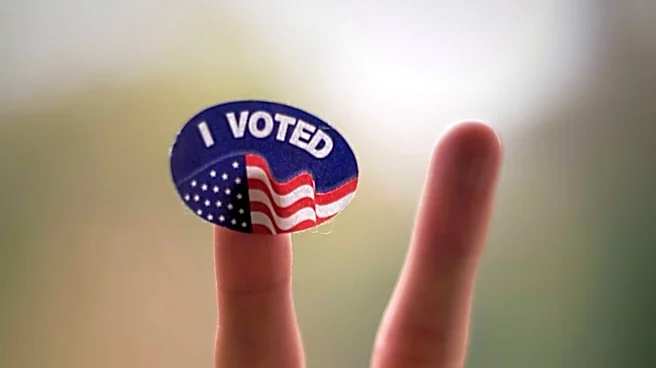
In South Dakota, voters participated in a runoff election to decide the Republican nominee for governor. The election featured incumbent Governor Larry Rhoden and Aberdeen businessman Toby Doeden. Voter sentiment varied, with some expressing dissatisfaction
with the choices available. Many voters, like Lucy Burdick from Fort Pierre, voted against Doeden rather than for Rhoden, citing concerns over Doeden's policy proposals, such as eliminating property taxes. The runoff was necessitated after Doeden failed to secure 35% of the vote in a previous primary. The election highlighted the strategic decisions voters make when faced with limited options and the impact of party switching, as some Democrats registered as Republicans to influence the outcome.
Why It's Important?
This runoff election is significant as it reflects broader themes in American politics, such as voter disillusionment and strategic voting. The outcome will determine the Republican candidate for the upcoming general election, potentially influencing the political landscape in South Dakota. The election also underscores the importance of voter engagement and the role of party affiliation in shaping electoral outcomes. The increase in registered Republicans suggests a strategic shift among voters seeking to impact the primary process. This election could serve as a case study for understanding voter behavior and the dynamics of party loyalty in U.S. politics.
What's Next?
The winner of the runoff will face Democratic nominee Dan Ahlers in the general election. The results of this election could influence future policy directions in South Dakota, particularly regarding taxation and governance. Political analysts will likely examine the voter turnout and party-switching trends to assess their impact on the election outcome. The general election will provide an opportunity for candidates to address broader state issues and appeal to a wider electorate. The strategies employed by both parties in the lead-up to the general election will be crucial in determining the political future of South Dakota.