






What's Happening?
Nicaragua has formally accused Germany at the International Court of Justice (ICJ) in The Hague of breaching its obligations under the Genocide Convention. The accusation stems from Germany's continued supply of weapons and military support to Israel,
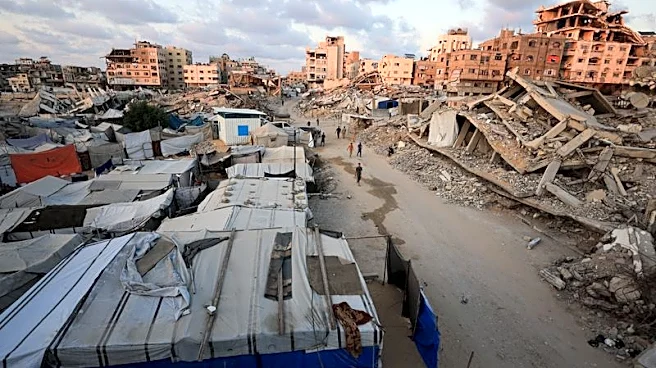
which Nicaragua alleges facilitates acts of genocide in Gaza. Nicaragua's lead lawyer, Carlos José Argüello Gómez, argued that Germany's close political, commercial, and military ties with Israel mean it was, or should have been, aware of a serious risk that genocidal acts were being committed. Germany, which is Israel's second-largest arms supplier after the United States, has rejected these allegations and requested the court to dismiss the case. Israel is not a party to these specific proceedings and denies that its conduct in Gaza amounts to genocide. The current hearings are focused on the ICJ's jurisdiction to hear Nicaragua's case, with a ruling on this expected later this year. If the case proceeds, a final judgment could take several years.
Why It's Important?
This case is significant as it represents a direct legal challenge to a major U.S. ally's military support for Israel, potentially setting a precedent for how international law is applied to states providing aid during conflicts. Germany's role as a key arms supplier to Israel, second only to the United States, places its actions under intense scrutiny. A ruling against Germany could have far-reaching implications for other nations, including the U.S., that provide military assistance to countries involved in conflicts where allegations of genocide are raised. It highlights the complex legal and ethical dilemmas faced by states in balancing international humanitarian law with geopolitical alliances. The outcome could influence future arms export policies and international relations, particularly concerning the responsibilities of states under the Genocide Convention. It also underscores the growing international pressure on Israel and its allies regarding the conflict in Gaza.
What's Next?
The immediate next step is for the International Court of Justice to rule on its jurisdiction to hear Nicaragua's case against Germany. This ruling is anticipated later this year. If the ICJ determines it has jurisdiction, the case will proceed to a full hearing on the merits, which could take several years to conclude. During this period, Germany will likely continue to defend its position, arguing that its actions do not violate the Genocide Convention and that Nicaragua did not properly attempt to resolve the dispute before bringing it to court. The proceedings will be closely watched by other nations, particularly those that also supply arms to Israel, as the outcome could influence their own foreign policy and military aid decisions. The case is one of several international legal proceedings related to the Gaza conflict, including a separate genocide case brought by South Africa against Israel at the ICJ.
Beyond the Headlines
This legal challenge extends beyond the immediate allegations against Germany, touching upon the broader interpretation and enforcement of the Genocide Convention in contemporary conflicts. It raises fundamental questions about the responsibility of states to prevent genocide, not only through direct action but also by refraining from actions that could enable it. The case could redefine the scope of 'complicity' in international law, potentially impacting how military and economic aid is assessed in conflict zones. Furthermore, it highlights the increasing use of international legal forums by smaller nations to challenge the actions of more powerful states, reflecting a shift in global diplomatic strategies. The ethical dimension of arms sales, particularly to regions embroiled in intense conflict, is brought to the forefront, prompting a re-evaluation of national security interests versus international humanitarian obligations. The long-term implications could include a more cautious approach to arms exports globally and increased scrutiny of military alliances.