




What's Happening?
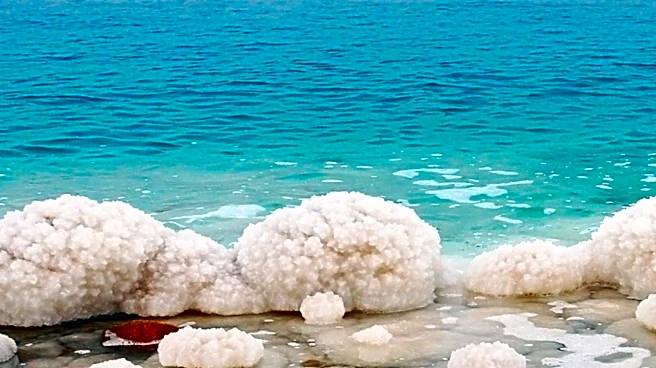
Dead Sea salt is characterized by a unique chemical composition, differing substantially from typical sea salt. Unlike ordinary sea salt, which is predominantly sodium chloride, Dead Sea salt contains only about 30% sodium chloride. Its primary constituents
are magnesium, calcium, potassium, and bromide salts. This distinct mineral profile is a result of the Dead Sea's extreme environment, a landlocked hypersaline lake in the Jordan Rift Valley. Intense heat and evaporation over extended periods have concentrated dissolved minerals, leading to this unusual composition. The Dead Sea lies approximately 440 meters below sea level, making it Earth’s lowest exposed land surface. With no outlet, water loss occurs almost entirely through evaporation, driving its salinity to about 34%, which is ten times that of the ocean. This high density, reaching around 1.24 kg per liter, allows for effortless floating and largely prevents marine life from thriving.
Why It's Important?
The unique mineral composition of Dead Sea salt holds significant importance, particularly for industries focused on health, wellness, and cosmetics. The high concentrations of magnesium, calcium, potassium, and bromide salts are often touted for their therapeutic properties, making Dead Sea salt a sought-after ingredient in skincare products, bath salts, and dermatological treatments. This distinct profile differentiates it from common sea salts, which are primarily used for culinary purposes. For consumers, this means that products containing Dead Sea salt may offer different benefits compared to those with standard sea salt. The geological processes that created this unique salt also provide a rare chemical archive of climatic shifts in the Middle East over millions of years, offering valuable insights for scientific research into Earth's history and environmental changes. The economic implications extend to the tourism sector, as the Dead Sea's unique buoyancy attracts visitors for its floating experience and perceived health benefits.
What's Next?
The continued scientific study of Dead Sea salt's unique mineral composition may lead to further discoveries regarding its potential applications in various fields, including medicine, material science, and environmental research. As awareness of its distinct properties grows, demand for Dead Sea salt in the global health and beauty markets is likely to persist, potentially driving innovation in product development. The ongoing environmental changes affecting the Dead Sea, such as its dropping water levels, could also influence the future availability and characteristics of its salt. Conservation efforts and sustainable harvesting practices will become increasingly important to ensure the long-term viability of this unique natural resource. Furthermore, the geological record preserved within the Dead Sea's mineral layers will continue to be a subject of interest for paleoclimatologists and geologists studying ancient climates and tectonic activity.
Beyond the Headlines
The Dead Sea's unique salt composition transcends its commercial applications, offering a profound glimpse into the interplay of geology, climate, and chemistry. Its formation in one of Earth's most extreme environments highlights the power of natural processes to create distinct chemical signatures. The high salinity and mineral content, while preventing most life, have paradoxically created an environment that supports specific extremophile microorganisms, offering avenues for astrobiological research into life in harsh conditions. Culturally, the Dead Sea has been revered for millennia, with historical accounts and ancient texts referencing its therapeutic qualities. This deep historical and cultural significance adds another layer of importance to its unique salt, connecting modern scientific understanding with ancient wisdom. The ongoing environmental challenges facing the Dead Sea also underscore broader issues of water resource management and the impact of human activity on fragile ecosystems, making its salt a symbol of both natural wonder and environmental concern.