





What's Happening?
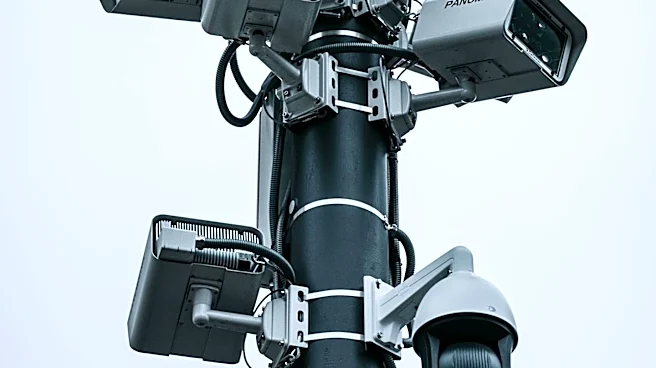
Officials in Quincy, Massachusetts, are currently debating new regulations for automatic license plate reader (ALPR) cameras. This discussion follows months of public debate regarding privacy and public safety concerns surrounding the city's previous
system, which utilized Flock Safety cameras. The city had one of the highest concentrations of these cameras in Massachusetts, but they have since been deactivated. Mayor Thomas Koch indicated that Quincy plans to transition to a different system, which he stated would be entirely internal, limiting data access solely to the Quincy police for investigative purposes. Despite this proposed change, opposition to the technology persists among some residents. Quincy Police Chief Mark Kennedy has defended the use of ALPRs, asserting their effectiveness in accelerating investigations by providing leads in minutes rather than days. He also refuted claims that the technology tracks individuals or employs facial recognition, stating he would oppose it if those claims were true. The Quincy City Council recently passed a resolution to establish guidelines for future camera technology and mandate council approval before implementation. Additionally, councilors are working on another resolution to urge state lawmakers to create statewide regulations for ALPR technology, as comprehensive state and federal rules are currently lacking.
Why It's Important?
The ongoing debate in Quincy highlights a critical tension between public safety and individual privacy rights in the digital age, a challenge faced by communities across the U.S. The lack of comprehensive state and federal regulations for ALPRs means that local municipalities like Quincy are left to formulate their own policies, leading to a patchwork of rules that can vary significantly from one jurisdiction to another. This situation creates uncertainty for both law enforcement agencies seeking to leverage technology for crime prevention and residents concerned about surveillance. The outcome in Quincy could set a precedent for other Massachusetts communities grappling with similar issues, influencing how surveillance technologies are adopted and governed at the local level. The push for statewide rules by Quincy councilors underscores a broader need for a unified approach to ALPRs, which could impact civil liberties and law enforcement practices across Massachusetts and potentially inspire similar legislative efforts nationwide. The debate also reflects a growing public demand for transparency and accountability in the deployment of advanced surveillance tools.
What's Next?
The Quincy City Council is actively pursuing two key resolutions. One resolution aims to establish specific guardrails for any future camera technology adopted by the city and will require council approval before such systems are implemented. The second resolution seeks to encourage state lawmakers to develop and enact statewide rules governing automatic license plate reader technology. This indicates a continued legislative effort at both the local and state levels to address the policy vacuum surrounding ALPRs. Mayor Thomas Koch has stated the city's intention to move to a new, internal ALPR system, which suggests that while the Flock Safety cameras are currently powered down, the city plans to reintroduce some form of license plate reading technology. The public debate is expected to continue as residents and officials work towards a balance between enhancing public safety and protecting privacy. The actions taken by Quincy could influence legislative discussions and policy decisions in other Massachusetts communities and potentially at the state level, as they navigate the complexities of modern surveillance technologies.
Beyond the Headlines
The Quincy debate over ALPRs extends beyond immediate policy decisions, touching upon fundamental questions about the nature of surveillance in a democratic society. The assertion by some residents that the technology is 'fundamentally incompatible with democracy' points to deeper concerns about the erosion of privacy and the potential for mission creep in data collection. While law enforcement emphasizes the efficiency gains in investigations, critics often highlight the potential for mass surveillance, data breaches, and the disproportionate impact on certain communities. The discussion also raises ethical considerations regarding the storage, sharing, and potential misuse of collected data, even if it doesn't involve facial recognition. The push for statewide regulation reflects a recognition that individual municipal policies may not be sufficient to address the broader societal implications of such pervasive technology. This local struggle in Quincy is a microcosm of a national conversation about how to integrate powerful new technologies into public life while upholding constitutional rights and democratic values, potentially leading to new legal frameworks and public oversight mechanisms for surveillance tools.