


What's Happening?
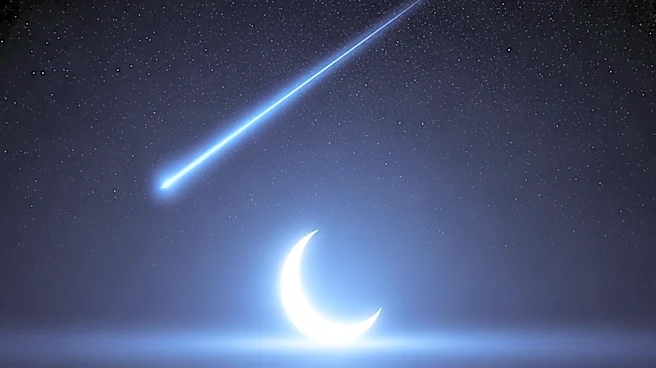
April is set to be an exciting month for astronomy enthusiasts, with several celestial events visible in the night sky. Venus, one of the brightest objects, will be visible early in the evening, setting about 90 minutes after sunset at the beginning of the month and
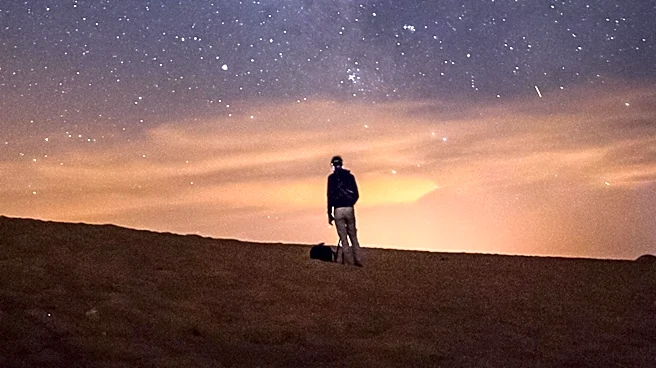
two hours after sunset by the end. On April 19, a conjunction of Venus and the moon will occur, providing a striking visual as the 2-day-old moon passes to the north of Venus. Additionally, Jupiter will be visible, with its moons observable through binoculars and its cloud bands through a telescope. The Lyrid meteor shower, one of the oldest recorded meteor showers, will peak on the night of April 21 into early April 22, offering the chance to see 10 to 20 meteors per hour under dark skies.
Why It's Important?
These astronomical events provide a unique opportunity for both amateur and professional astronomers to observe and study celestial phenomena. The visibility of Venus and Jupiter, along with the Lyrid meteor shower, allows for educational and recreational activities that can engage the public in science and astronomy. Such events can inspire interest in space exploration and increase awareness of the universe beyond Earth. The Lyrid meteor shower, originating from Comet Thatcher, offers a glimpse into the history of celestial observations, dating back over 2,600 years. These events also highlight the importance of preserving dark skies, free from light pollution, to fully appreciate the beauty and science of the night sky.
What's Next?
As April progresses, more celestial events are expected, including the appearance of Comet C/2025 R3 (PanSTARRS) on April 25, which will be closest to Earth on April 27. This comet will be visible as a fuzzy glow in the evening sky, potentially showing a faint tail under darker skies. The Flower Moon will rise on May 1, named for the abundance of wildflowers during this time of year. The Eta Aquarids meteor shower will peak on May 5-6, offering up to 30 meteors per hour. These events provide ongoing opportunities for skywatching and further engagement with astronomy.
Beyond the Headlines
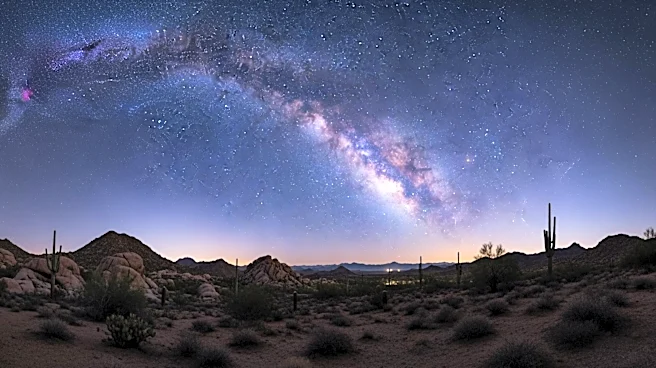
The visibility of these celestial events underscores the importance of dark sky preservation efforts. Light pollution can significantly hinder the ability to observe and enjoy astronomical phenomena, impacting both scientific research and public enjoyment. Efforts to reduce light pollution can enhance the visibility of such events and promote environmental awareness. Additionally, these events can foster community engagement through organized skywatching events and educational programs, encouraging a broader appreciation for science and the natural world.