






What's Happening?
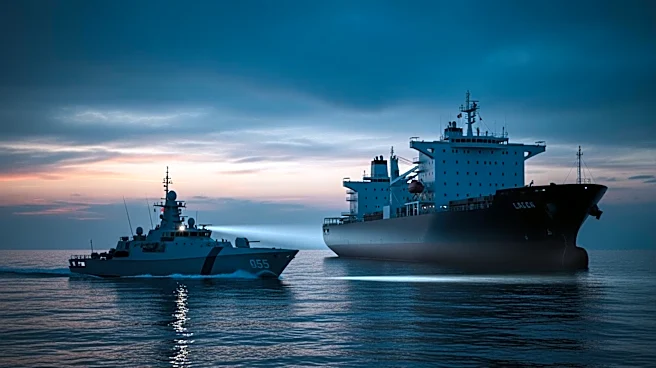
The Strait of Hormuz, a critical maritime passage for global oil shipments, has become a focal point of international tension following a U.S. military strike on an Iranian-flagged cargo ship. This action comes amid a series of tanker attacks attributed
to Iran, further complicating the geopolitical landscape in the region. The incident has led to a halt in tanker traffic, with numerous ships idling in ports such as Singapore, awaiting the reopening of the strait. The situation has created uncertainty in global markets, with early trading showing stability, but potential volatility as European and U.S. markets open.
Why It's Important?
The Strait of Hormuz is a vital artery for the global oil supply, with a significant portion of the world's petroleum passing through it. Any disruption in this region can have far-reaching implications for global energy prices and economic stability. The U.S. strike on the Iranian vessel underscores the escalating tensions between the U.S. and Iran, which could lead to broader geopolitical conflicts. This development is particularly concerning for international markets, as it introduces a risk of increased volatility and potential economic repercussions. Stakeholders in the energy sector, as well as policymakers, are closely monitoring the situation.
What's Next?
The immediate future will likely involve diplomatic efforts to de-escalate tensions and ensure the safe passage of ships through the Strait of Hormuz. The international community, including central bankers and policymakers, is expected to engage in discussions to address the economic and security implications of the conflict. The U.S. and its allies may consider additional measures to protect maritime traffic, while Iran's response to the strike could further influence the geopolitical dynamics. The outcome of these developments will be critical in determining the stability of global oil markets and international relations.