
What's Happening?
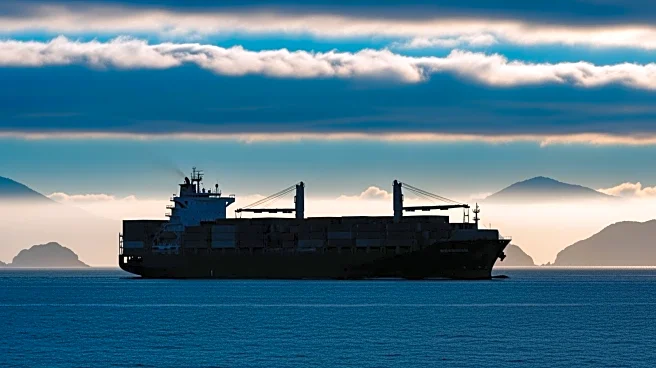
Maersk has completed its first transit through the Red Sea in nearly two years, marking a cautious step towards resuming operations in the region. The Maersk Hangzhou navigated the area following the launch
of the U.S.-led Operation Prosperity Guardian. However, the vessel encountered an incident where it was hit by an unknown object and faced an attempted boarding by four boats. The U.S. Navy intervened, destroying several Houthi boats involved in the attack. Despite this initial transit, Maersk has suspended further operations through the Red Sea, opting to divert vessels around the Cape of Good Hope due to ongoing security concerns.
Why It's Important?
The resumption of Maersk's transit through the Red Sea is significant for global shipping routes, particularly those connecting the U.S. East and Gulf Coast to India. The Red Sea is a critical corridor for international trade, and its security is paramount for shipping companies. The incident underscores the persistent security challenges in the region, affecting insurance costs and operational decisions for shipping companies. Maersk's cautious approach reflects the broader industry's need to balance operational efficiency with safety, impacting shipping schedules and potentially increasing costs for goods transported through alternative routes.
What's Next?
Maersk plans to continue monitoring the security situation before resuming regular transits through the Red Sea. The company is considering a gradual approach to restoring navigation along the East-West corridor via the Suez Canal, contingent on meeting security thresholds. Other shipping companies, like CMA CGM, are also testing the waters with limited transits, protected by naval operations. The industry anticipates a return to normal routing in the future, which could reduce transit times and release capacity back into the market, potentially lowering demand for ships by 10 percent.
Beyond the Headlines
The incident highlights the geopolitical tensions in the Red Sea region, where shipping routes are vulnerable to attacks. The involvement of the U.S. Navy and international naval forces underscores the strategic importance of securing these waters. Long-term, the situation may prompt shipping companies to invest in enhanced security measures or reconsider their reliance on this route. The ongoing instability could also influence regional trade policies and international relations, as countries and companies navigate the complexities of operating in high-risk areas.