





What's Happening?
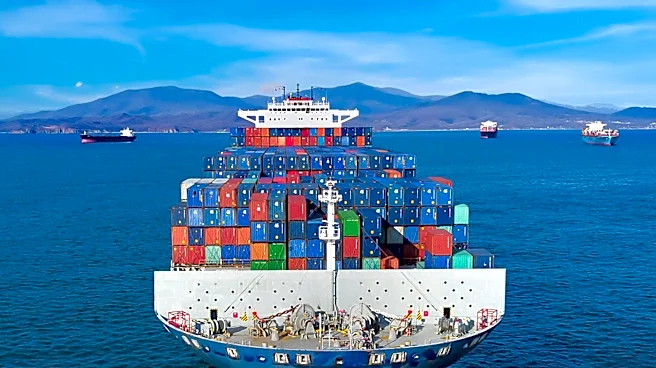
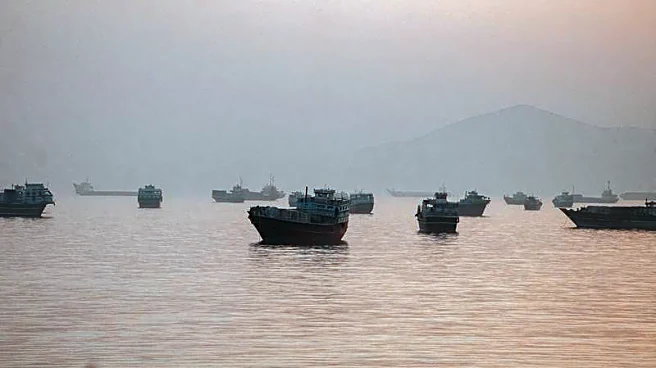
Traffic through the Strait of Hormuz has significantly decreased following recent U.S. military strikes on Iran. This development comes as a fragile truce between the two nations appears to be unraveling. The majority of observable ship movements are
occurring along an Iran-approved route, while the U.S.-supported Omani corridor remains largely inactive. Notably, only a U.S.-sanctioned supertanker and an Iranian-flagged container ship were seen navigating the strait, suggesting that some vessels might be operating with their transponders turned off. The slowdown in traffic follows a series of Iranian attacks on vessels, which prompted the U.S. response. President Trump has declared the ceasefire with Iran over, further escalating tensions. Recent data shows a stark reduction in the number of commodity carriers crossing the strait, with only 14 transits recorded on a recent day, compared to an average of 34 daily transits since an interim peace deal was reached in mid-June.
Why It's Important?
The Strait of Hormuz is a critical chokepoint for global energy supplies, and disruptions in its traffic can have significant implications for international oil markets. The recent decrease in ship movements highlights the vulnerability of this vital waterway to geopolitical tensions. The U.S. and Iran's escalating conflict could lead to further instability in the region, potentially affecting global oil prices and supply chains. The situation also underscores the strategic importance of the strait and the potential risks associated with military confrontations in the area. Stakeholders in the energy sector, including oil companies and shipping firms, may face increased operational challenges and insurance costs as a result of the heightened tensions.
What's Next?
The ongoing tensions between the U.S. and Iran are likely to continue affecting maritime traffic through the Strait of Hormuz. Shipping companies may need to reassess their routes and security measures to mitigate risks. Additionally, further military actions or diplomatic efforts could alter the current dynamics in the region. The international community, particularly countries reliant on oil imports through the strait, will be closely monitoring the situation. Potential diplomatic interventions or negotiations could emerge as efforts to stabilize the region and ensure the safe passage of vessels.
Beyond the Headlines
The current situation in the Strait of Hormuz highlights broader geopolitical challenges, including the balance of power in the Middle East and the role of international diplomacy in conflict resolution. The strategic importance of the strait as a global energy conduit underscores the interconnectedness of regional conflicts and global economic stability. The potential for electronic interference affecting ship-tracking data also raises concerns about cybersecurity and the vulnerability of critical infrastructure to technological disruptions.