





What's Happening?
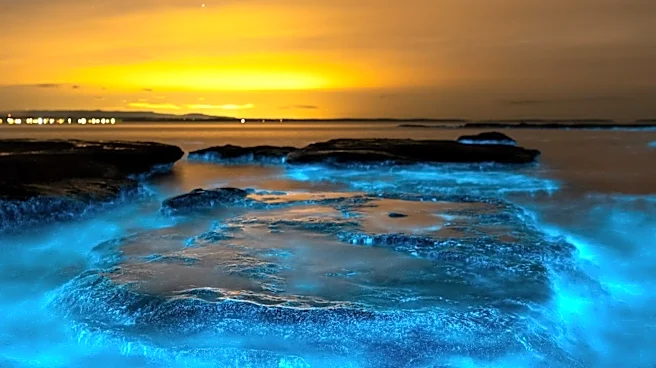
The waters of Jervis Bay and Shoalhaven are experiencing bioluminescence, a natural phenomenon where microscopic marine organisms, primarily dinoflagellates or 'sea sparkle,' emit a vivid blue-green light when disturbed. This occurrence transforms the
water into a glowing spectacle, with waves, footprints, and marine life appearing illuminated. The phenomenon is a result of a chemical reaction involving luciferin and luciferase, which release energy as visible light. Jervis Bay is considered a prime location for bioluminescence due to its sheltered waters, unique coastal geography, and favorable marine conditions that allow large concentrations of plankton to gather. While unpredictable, sightings are more common from late autumn through winter (May to August), though they can occur year-round. Observers can sometimes spot reddish, pink, or rusty-brown patches of water during the day, which can indicate a potential bioluminescent bloom later that night.
Why It's Important?
The bioluminescence in Jervis Bay and Shoalhaven holds significant importance for the region's tourism and scientific communities. It draws photographers and visitors from around the world, boosting local economies through increased tourism. The phenomenon also offers a unique opportunity for scientific study into marine biology and the environmental conditions that trigger such large-scale bioluminescent displays. Understanding these conditions can contribute to broader knowledge of ocean ecosystems and plankton dynamics. For the public, it provides a rare and captivating natural spectacle, fostering an appreciation for marine environments. However, the unpredictability of the phenomenon means that local businesses and visitors must remain flexible, and responsible viewing practices are crucial to protect the delicate marine habitats that support this natural wonder.
What's Next?
To maximize the chances of witnessing bioluminescence, visitors are advised to seek dark nights with minimal moonlight, calm weather conditions, and locations away from artificial lighting. Following recent reports of sightings in the region can also increase success. Local authorities and tourism operators emphasize responsible viewing, including taking care in the dark, respecting wildlife, leaving no trace, minimizing light pollution, and staying on designated paths. While swimming in bioluminescent water is generally considered harmless, visitors should always heed local water quality warnings. Efforts will likely continue to educate the public on how to best experience and protect this natural wonder, ensuring its sustainability for future generations and continued scientific observation.
Beyond the Headlines
The bioluminescence in Jervis Bay and Shoalhaven highlights a broader ecological narrative about the delicate balance of marine ecosystems. The presence and intensity of these 'sea sparkle' blooms are indicators of specific environmental conditions, including nutrient levels, water temperatures, and ocean currents. Changes in these factors, potentially influenced by climate patterns or human activity, could impact the frequency and vibrancy of bioluminescent displays. This natural light show also underscores the intrinsic value of preserving coastal environments, as the organisms responsible for the glow are part of a complex food web. The ethical considerations of tourism, such as minimizing disturbance to wildlife and habitats, become paramount in ensuring that the pursuit of such natural wonders does not inadvertently harm the very ecosystems that create them. It serves as a powerful reminder of nature's capacity for beauty and the importance of its conservation.