
What's Happening?
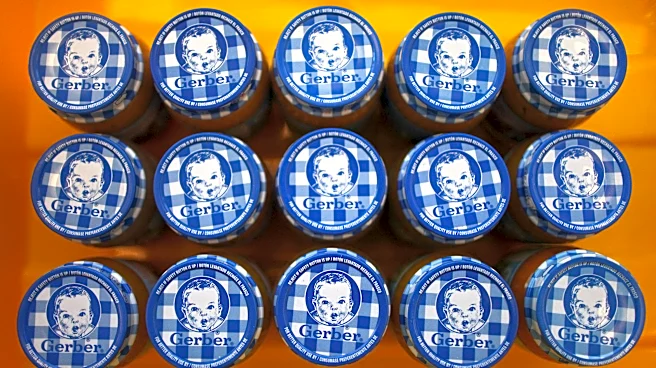
Hundreds of parents have filed lawsuits against major baby food manufacturers, including Gerber, Beech-Nut, Campbell, and Nurture, accusing them of selling products contaminated with toxic heavy metals.
The lawsuits allege that these companies knowingly exposed children to harmful substances such as arsenic, lead, cadmium, and mercury, which are known to cause brain damage and neurodevelopmental harm. The complaints highlight injuries such as autism spectrum disorder and ADHD, although no direct evidence has been provided. A congressional inquiry previously found significant levels of these metals in commercial baby foods, and the FDA has issued reminders to manufacturers about standards.
Why It's Important?
The lawsuits underscore growing concerns about food safety and the potential health risks posed by heavy metals in baby food. If successful, these legal actions could lead to stricter regulations and testing requirements for baby food products, impacting the industry significantly. The allegations also raise questions about corporate responsibility and transparency, as the companies are accused of disregarding the welfare of infants. The outcome of these lawsuits could influence public trust in baby food brands and prompt changes in consumer behavior, potentially affecting market dynamics.
What's Next?
The lawsuits are seeking a jury trial and judgment to punish and deter the companies involved. The FDA has initiated campaigns like 'Closer to Zero' to reduce contamination in children's food, and a bill called the Baby Food Safety Act is being considered in Congress to set enforceable limits on heavy metals. The legal proceedings and potential legislative changes could lead to increased scrutiny and regulatory oversight in the baby food industry.
Beyond the Headlines
The issue of heavy metals in baby food highlights broader ethical and legal challenges in food manufacturing. It raises questions about the adequacy of current regulations and the balance between corporate interests and consumer safety. The situation may prompt discussions on the need for more comprehensive food safety standards and the role of government agencies in protecting public health.