
What's Happening?
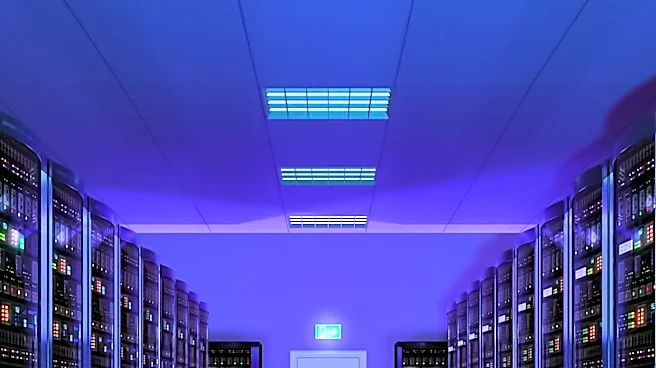
President Donald Trump has publicly defended the construction and proliferation of data centers across the United States, asserting that communities opposing them risk becoming 'backwards and poor.' In
a post on Truth Social, President Trump stated that communities seeking success, wealth, lower taxes, and job creation should embrace data centers. He warned that hindering their development would be akin to 'killing the Golden Goose' and suggested that China would welcome such an anti-data center movement. This statement comes amidst growing public backlash against data centers, driven by concerns over their substantial electricity and water consumption, their often secretive development by tech companies, and fears that artificial intelligence (AI) could exacerbate economic disparities and lead to widespread job losses. Data center proponents, however, emphasize the local tax revenues these facilities generate, which can help fund public services like schools and reduce the tax burden on homeowners.
Why It's Important?
President Trump's strong endorsement of data centers highlights a significant economic and technological debate currently unfolding in the U.S. His remarks underscore the administration's view that data centers are crucial for technological advancement, particularly in artificial intelligence, and for fostering economic prosperity. The pushback against data centers, as evidenced by a Fox News poll showing 70% voter opposition, reflects a broader societal anxiety about the rapid pace of technological change, its environmental footprint, and its potential socio-economic consequences. This tension between economic development and community concerns presents a challenge for policymakers. The debate also touches upon energy infrastructure, as Vice President JD Vance clarified President Trump's stance by suggesting that data center developers should build their own power plants to avoid straining existing grids and increasing utility costs for residents. This indicates a potential policy direction aimed at mitigating the environmental and economic impact of these facilities.
What's Next?
The debate surrounding data centers is likely to intensify, with President Trump's comments adding a significant political dimension. Communities across the U.S. will continue to grapple with proposals for new data center developments, balancing potential economic benefits against environmental and social concerns. Policy discussions may focus on incentives for data center companies to invest in their own energy infrastructure, as suggested by Vice President JD Vance, to alleviate pressure on local power grids and reduce utility costs for residents. This could lead to new regulations or guidelines for data center construction and operation. Furthermore, the public's apprehension about AI's impact on jobs and economic equality will likely remain a prominent theme, influencing how these technological advancements are perceived and integrated into society. The political discourse around data centers could also become a factor in future elections, as candidates align themselves with either the economic growth narrative or the community and environmental protection concerns.
Beyond the Headlines
President Trump's defense of data centers touches upon a deeper ideological conflict regarding technological progress and its societal integration. His argument frames opposition to data centers as a barrier to modernity and prosperity, aligning with a pro-growth, pro-technology stance. Conversely, the public's concerns reflect a growing skepticism about unchecked technological expansion, particularly when it impacts local resources and quality of life. This tension highlights the ethical dilemma of balancing innovation with sustainability and social equity. The discussion around data centers also implicitly raises questions about energy policy and the future of the U.S. power grid, especially as AI demands increasingly more computational power. The call for data centers to generate their own electricity could signal a shift towards more decentralized and self-sufficient energy solutions for large industrial consumers, potentially influencing broader energy infrastructure development and investment strategies. This debate is not just about data centers but about the kind of future society envisions in an era of rapid technological transformation.