



What's Happening?
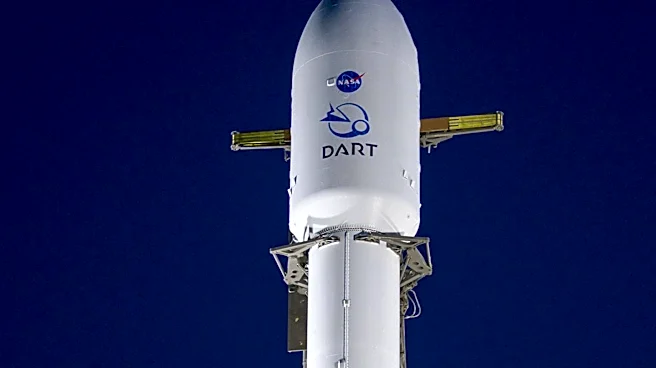
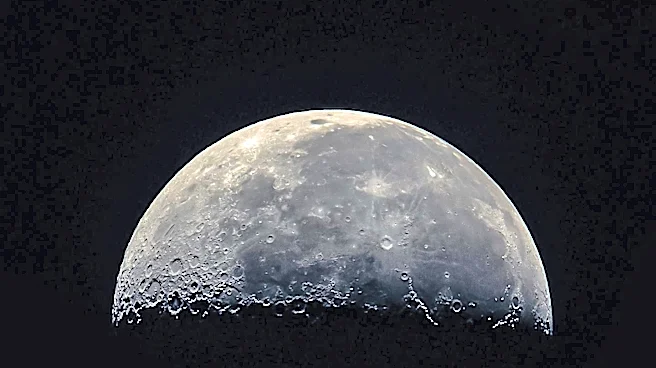
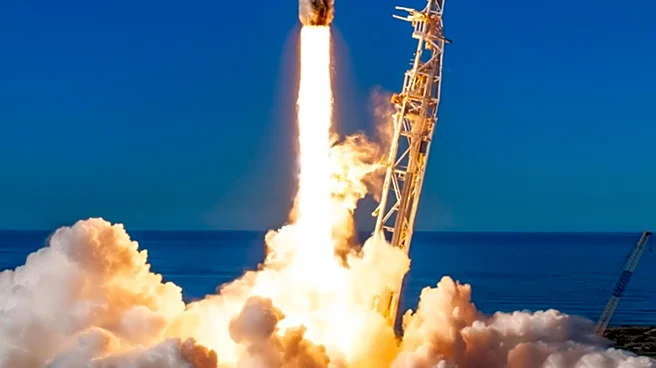
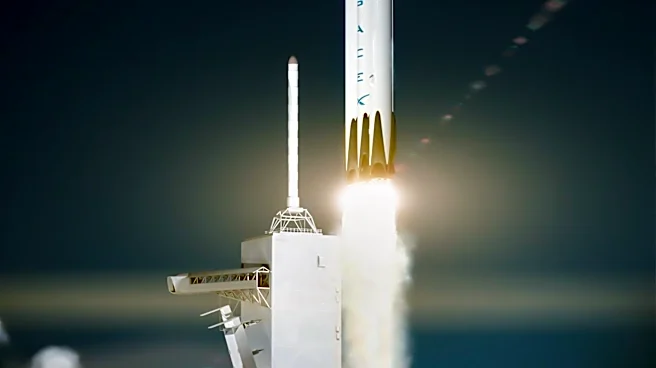
The upper stage of a SpaceX Falcon 9 rocket is set to crash into the moon, creating a new crater and providing scientists with a unique opportunity to study the impact. This event is scheduled to occur early Wednesday morning, with the rocket stage traveling
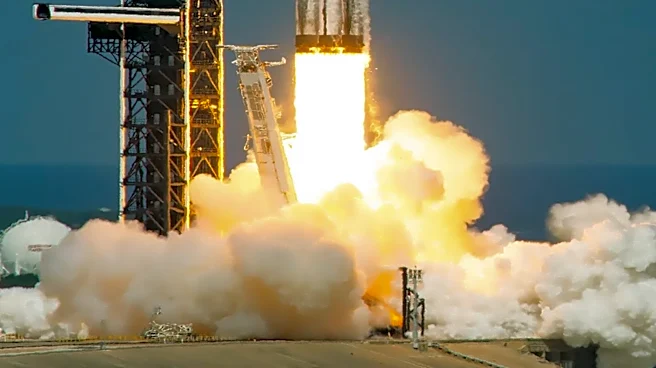
at approximately 5,400 mph. The collision is expected to produce a crater between 50 to 100 feet in diameter, ejecting a plume of lunar dust into space. This particular rocket stage was part of a mission launched on January 15, 2025, which included the deployment of Firefly Aerospace's Blue Ghost Mission 1 and ispace's Resilience lunar lander. The stage remained in a highly elliptical Earth orbit before gravitational forces set it on a collision course with the moon.
Why It's Important?
This planned impact is significant as it allows scientists to observe and analyze the effects of a known mass, shape, and velocity on the lunar surface, which is a rare opportunity. Typically, the moon is bombarded by meteoroids, but these events are unpredictable. The data collected from this impact will help refine models of crater formation and debris movement, which are crucial for future lunar exploration missions. Additionally, understanding the impact dynamics can aid in preparing for more frequent robotic and human missions to the moon, as it provides insights into the lunar environment and potential hazards.
What's Next?
Following the impact, NASA's Lunar Reconnaissance Orbiter and other lunar orbiters are expected to capture images of the resulting crater and ejecta. These observations will be compared with computer models to enhance understanding of lunar impacts. The scientific community, including both professional and amateur astronomers, is encouraged to observe the event and share data, which could further improve the understanding of the moon's surface and its response to impacts.