








What's Happening?
New research from the University of Birmingham indicates that an existing drug could be repurposed to target neuroinflammation in various brain conditions, including Alzheimer's and Parkinson's disease. A team led by Professor Nicholas Barnes identified
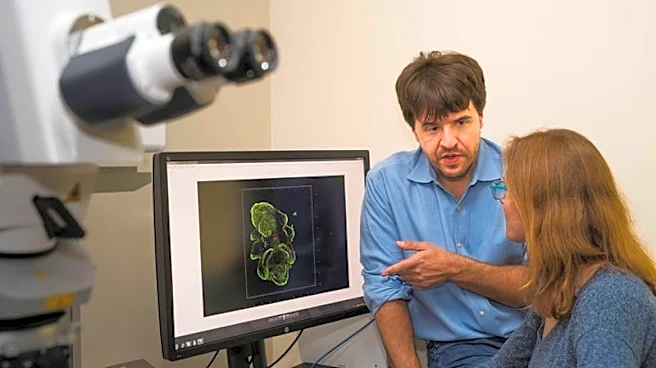
a critical receptor, the P2X7 receptor, which triggers inflammatory signaling in brain cells. By blocking this receptor with a specific antagonist, researchers observed a significant reduction in the inflammatory response within human brain tissue. This discovery, published in the journal Brain, involved studying live cultures of human brain cells and tissue obtained during neurosurgery. The team also developed a method to convert white blood cells into microglia-like cells, which are central coordinators of the brain's immune system, to better understand their response to inflammation signals. This approach allowed them to interrupt inflammatory triggers released by damaged microglia.
Why It's Important?
This research is significant because it identifies a potential new therapeutic pathway for a wide range of chronic neurological conditions that have a neuroinflammatory component. Conditions such as Alzheimer's, Parkinson's, multiple sclerosis, and even psychiatric disorders like depression and psychosis, could benefit from this discovery. The ability to repurpose an existing drug means that the path to clinical trials and eventual patient access could be significantly accelerated compared to developing an entirely new compound. Targeting neuroinflammation at its source could offer a more effective treatment strategy, potentially slowing disease progression or alleviating symptoms in conditions where current treatments are limited to managing symptoms or slowing decline without restoring lost brain cells. This could lead to improved quality of life for millions affected by these debilitating diseases.
What's Next?
The successful translation of these findings from human monocyte-derived microglia to human brain tissue provides a strong impetus for the next stage: the development of clinical trials. Researchers plan to test this approach in patients with neurodegenerative conditions and those with traumatic brain injury (TBI), where effective pharmacological treatments for reducing neuroinflammation and associated damage are currently lacking. The focus will be on evaluating the safety and efficacy of blocking the P2X7 receptor in human subjects. If successful, this could lead to a new class of treatments that specifically target the inflammatory processes underlying these complex brain disorders, potentially offering hope for conditions that currently have no cure.
Beyond the Headlines
The study's methodology, which involved using human brain tissue and converting peripheral monocytes into microglia-like cells, represents a significant advancement in neuroscientific research. This approach overcomes previous challenges in studying human microglia, which tend to lose their characteristics outside their native brain environment. This innovative platform offers a powerful and scalable tool for future research into human microglial biology, potentially accelerating discoveries for other brain disorders. Furthermore, the identification of a single receptor that influences such a broad spectrum of conditions highlights the interconnectedness of inflammatory pathways in the brain and opens doors for a more holistic understanding and treatment of neurological and psychiatric illnesses.