
What's Happening?
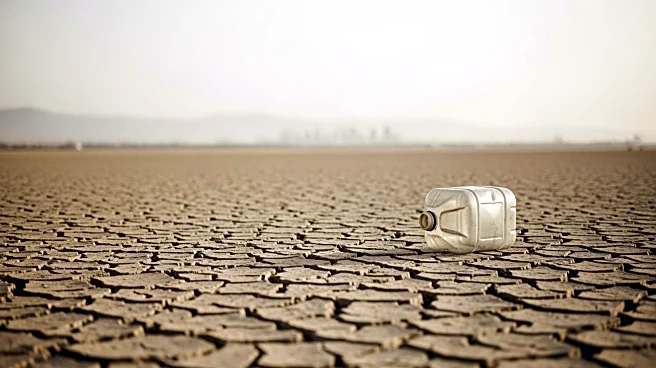
Tehran, Iran's capital, is facing a severe water crisis that may lead to the evacuation of its approximately 15 million residents. The city is experiencing its sixth consecutive year of drought, with key
water reservoirs like the Latyan Dam less than 10% full. President Masoud Pezeshkian has warned of potential evacuations if the situation does not improve. The crisis is attributed to years of overextraction, policies from the 1979 Islamic Revolution, and the cultivation of water-intensive crops. Additionally, climate change and pollution are exacerbating the situation, making extreme weather events more frequent and severe.
Why It's Important?
The water crisis in Tehran is a stark reminder of the global challenges posed by climate change and resource mismanagement. It highlights the vulnerability of urban centers to environmental changes and the potential for large-scale humanitarian crises. The situation in Tehran could have significant geopolitical implications, affecting regional stability and international relations. It also underscores the need for sustainable water management practices and international cooperation to address climate change and its impacts. The crisis serves as a warning to other regions facing similar environmental challenges.
What's Next?
Iranian authorities are exploring solutions such as cloud seeding to increase rainfall, although its effectiveness is debated. The government may need to implement stricter water management policies and invest in infrastructure to mitigate the crisis. International aid and cooperation could play a role in addressing the immediate needs and long-term solutions. The situation may prompt other countries to reassess their water management strategies and climate policies to prevent similar crises.