





What's Happening?
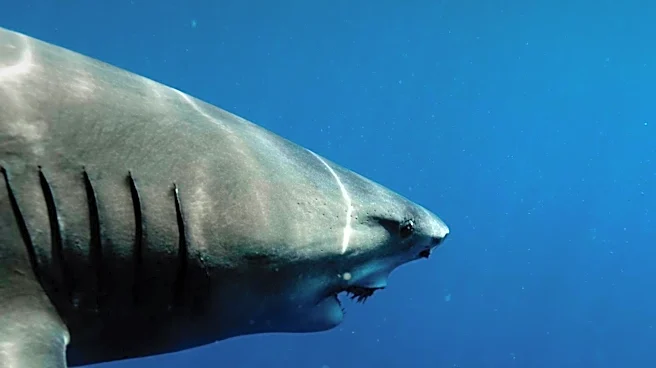
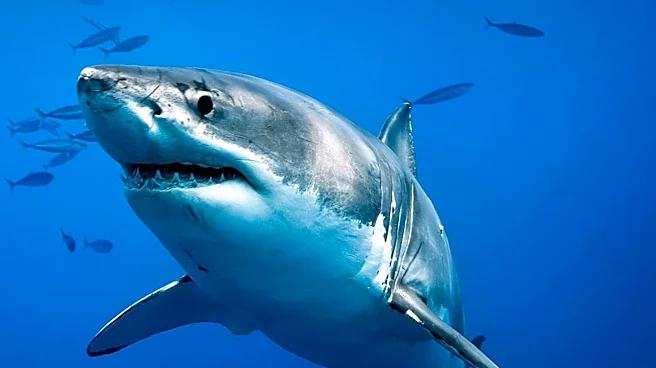
A 16-foot great white shark was observed with a perfectly circular hole in its head, a wound identified as a bite from a cookiecutter shark. This finding was part of a study published in the journal Frontiers in Marine Science, which categorizes scars
on great white sharks to understand their interactions with the environment and other marine life. The study, led by Scot Anderson from the California White Shark Project, uses these scars to infer the sharks' behaviors and habitats. The circular wound on the shark's head is typical of a cookiecutter shark bite, which occurs during the great white's offshore migration phase. The research also explores other types of scars that indicate interactions with boats, rocks, and other sharks, providing insights into the sharks' mating behaviors and environmental challenges.
Why It's Important?
This research enhances the understanding of great white shark behavior and ecology, offering clues about their migratory patterns and interactions with other marine species. By analyzing the scars, scientists can gather information on the sharks' life history and environmental pressures, which is vital for conservation efforts. Understanding these interactions helps in developing strategies to protect these apex predators, which play a crucial role in maintaining the balance of marine ecosystems. Additionally, the study's classification system for shark scars can be used to monitor the health and behavior of shark populations globally, contributing to marine conservation and management policies.