
What's Happening?
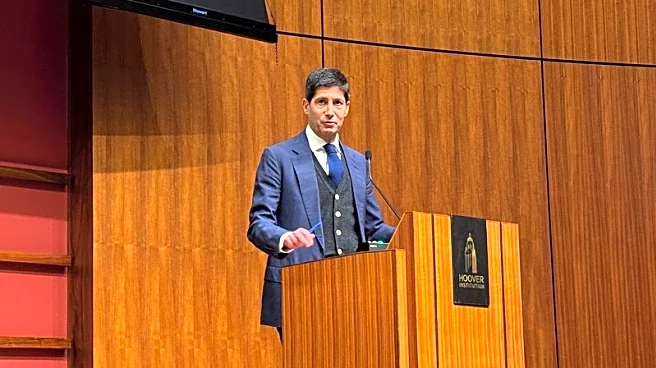
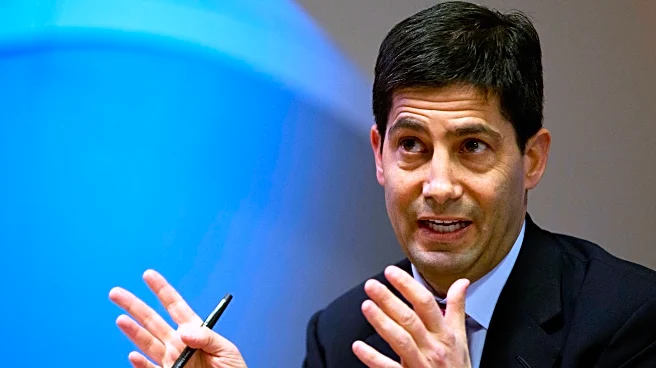
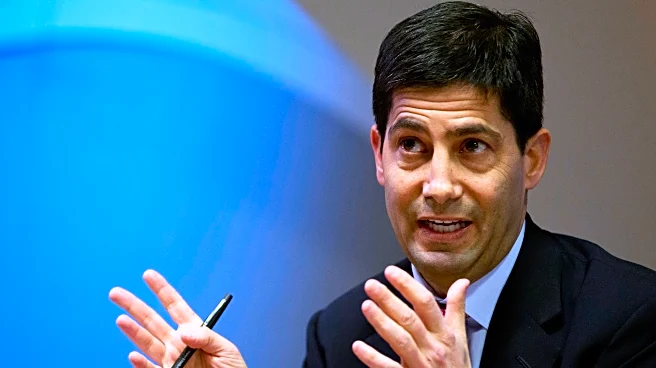
Kevin Warsh is poised to become the next Federal Reserve chair, a position he has sought since President Trump first considered him nearly a decade ago. Warsh's appointment comes with significant challenges,
as he must navigate the expectations of the Federal Reserve officials, financial markets, and President Trump. The current Fed chair, Jerome Powell, is under criminal investigation by the Department of Justice, which some view as a tactic to pressure him into lowering interest rates. Warsh's confirmation process may be complicated by this investigation, with some Senate Republicans opposing his nomination until the issue is resolved. Warsh must demonstrate independence from the White House to maintain credibility with the Fed and financial markets, while also managing President Trump's demands for lower interest rates.
Why It's Important?
The appointment of Kevin Warsh as Federal Reserve chair is crucial for U.S. monetary policy and economic stability. His ability to balance the Fed's independence with the administration's demands will impact interest rates, inflation, and economic growth. If Warsh is perceived as too aligned with President Trump, it could undermine the Fed's credibility and its ability to manage monetary policy effectively. Conversely, if he alienates the White House, it could lead to further political pressure on the Fed. The outcome of Warsh's confirmation and his subsequent actions will have significant implications for financial markets, businesses, and consumers, particularly in terms of borrowing costs and economic confidence.
What's Next?
Warsh's confirmation process in the Senate will be closely watched, especially given the ongoing investigation into Jerome Powell. If confirmed, Warsh will need to build consensus within the Fed's interest-rate setting committee, which is currently divided on the need for further rate cuts. He will also face the challenge of managing the Fed's $6.6 trillion balance sheet, a legacy of past economic crises. Warsh's approach to these issues will be critical in shaping U.S. monetary policy and addressing inflationary pressures. His ability to navigate these challenges will determine his effectiveness as Fed chair and the broader economic impact of his tenure.
Beyond the Headlines
Warsh's potential leadership of the Federal Reserve highlights the ongoing tension between political influence and central bank independence. The situation underscores the importance of maintaining a balance between government oversight and the Fed's ability to make decisions based on economic data and analysis. The outcome of Warsh's tenure could set a precedent for future interactions between the Fed and the executive branch, influencing how monetary policy is conducted in politically charged environments. Additionally, Warsh's stance on reducing the Fed's bond holdings could have long-term implications for the financial system and the availability of credit.